


Science fiction has recently experienced a resurgence in popularity, and it’s not just about the pretty pictures. Today’s science fiction is full of great stories that examine technology, identity, society, and what it truly means to be human. Whether it’s a classic animated film, a blockbuster series of films, or a television epic, the following 15 science fiction movies and television shows have a little something for every science fiction fan.

15. Wallace and Gromit: Vengeance Most Fowl
Wallace and Gromit have always been known for their mix of humor and creativity, but Vengeance Most Fowl takes a much more relevant approach than ever before. Essentially, this charming stop-motion romp is all about the dangers of technological advancement, particularly when said advancement threatens to replace creativity and care with cold, hard technology.

As Wallace is content to tinker away with his latest gadgets, Gromit must fight to protect his lively, unruly garden from the cold, calculating efficiency of the robotic Norbot. This is a simple enough premise, but it carries a lot of emotional weight in its clever commentary on the struggle between handmade art and soulless technology.

14. Transformers One
Transformers One breathes new life into the series by going back to its roots, but this time, with animation. But aside from the action-packed scenes, there is a lot more depth to the story, which is about friendship, power, and ideology.

The conflict between the heroes and the villains is not just black and white; it is a philosophical war, which focuses on the difference between Optimus Prime and Megatron, who were once brothers with different visions of justice. The political undertones of the movie are quite strong for an animated film. Even those who are not familiar with the Transformers series can easily follow the story, making it a great addition to the series’ lore.

13. The Wild Robot
The Wild Robot manages to be gentle, adventurous, and emotionally rich all at once. The story follows Roz, a robot who gradually finds purpose not through programming, but through caring for others in a wild, animal-filled environment.

As Roz becomes a mother figure and leader, the film explores identity, adaptation, and belonging. Characters like Bright Bill, a goose forced to survive outside his nature, add unexpected emotional depth. It’s the rare animated sci-fi that works just as well for adults as it does for kids, quietly devastating in the best way.

12. Robot Dreams
Told entirely without dialogue, Robot Dreams is a beautiful meditation on friendship, loss, and time. The film follows a lonely dog and his robot companion as their bond is tested by circumstance and change.

Small visual moments carry enormous emotional weight, from the robot forming connections with birds to dreamlike musical sequences filled with nostalgia. The recurring use of “September” adds a bittersweet emotional anchor. It’s a reminder that sci-fi doesn’t need exposition or spectacle to hit hard,d it just needs honesty.
11. Flow
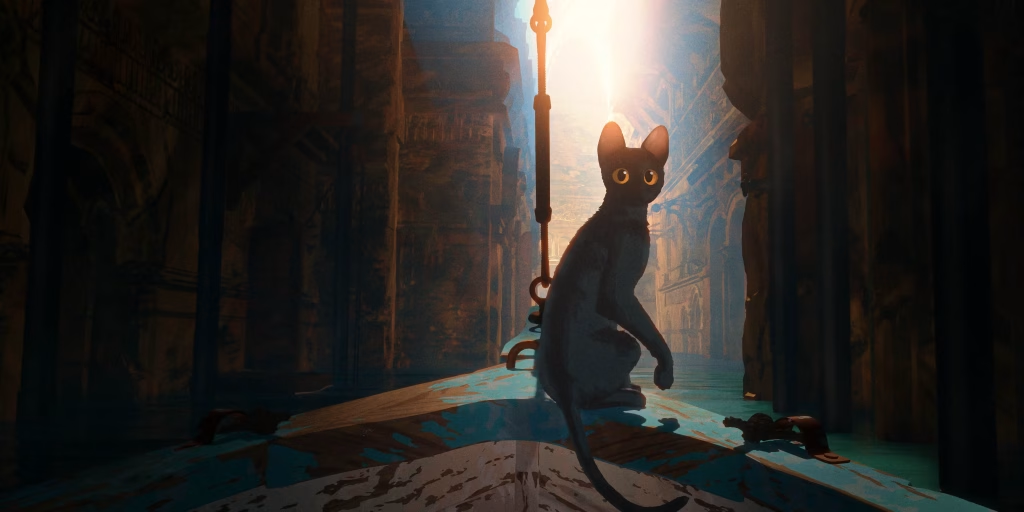
Flow is a visually arresting animated film that places animals at the center of a post-disaster world. With no spoken language, the story relies on movement, sound, and behavior to convey survival and cooperation.
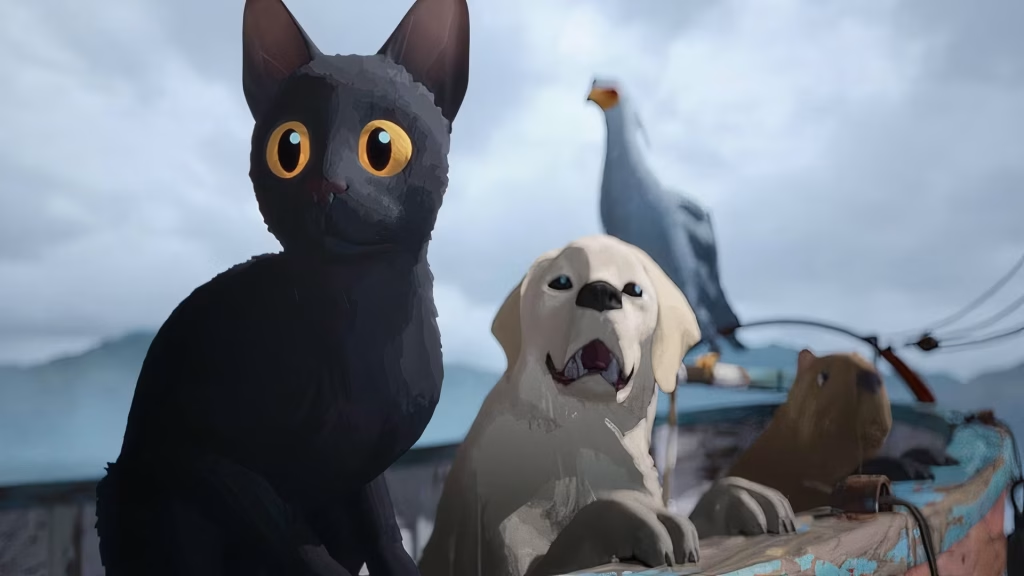
The animation, created using Blender, feels immersive and natural, capturing how animals communicate without words. While danger is ever-present, the film leans toward hope rather than despair. By removing humans from the spotlight, Flow offers a refreshing, eco-conscious take on science fiction storytelling.

10. ME
Don Hertzfeldt’s ME is only 22 minutes long, but it leaves a lasting impression. Using minimalist stick-figure animation and an eclectic score, the short explores how modern technology feeds isolation and self-obsession.

There’s no dialogue, just images that spiral into deeply unsettling territory. The film feels both absurd and painfully sincere, capturing the loneliness of retreating inward in a hyper-connected world. It’s strange, funny, and quietly devastating, classic Hertzfeldt in the best way.

9. Omni Loop
Omni Loop uses time travel not as a puzzle to solve, but as a lens for grief, regret, and intergenerational connection. Zoya, facing terminal illness, reflects on the lives she never lived, while Paula searches for meaning in her own uncertain future.

Their bond becomes the emotional core of the film, touching on feminism, legacy, and the wisdom passed between women. The sci-fi elements stay grounded, serving the characters rather than overshadowing them. It’s intimate, thoughtful, and far more emotionally complex than its indie budget might suggest.

8. A Quiet Place: Day One
Rather than focusing on survival at all costs, A Quiet Place: Day One asks a more haunting question: What do you live for when the world is ending? Lupita Nyong’o delivers a powerful performance as Sam, a woman facing both terminal illness and an alien invasion.

Her priorities feel refreshingly human, and her bond with her cat adds unexpected tenderness. The scares are effective, but it’s the existential undertone that makes this entry linger.

7. Kingdom of the Planet of the Apes
Jumping far ahead in the timeline, Kingdom of the Planet of the Apes introduces a new generation shaped by the myths and ruins of the past. The film wastes no time establishing its characters and conflicts.

Proximus, a villain obsessed with Roman history, adds a chilling layer of ideology, while Nova’s mysterious role keeps the story unpredictable. The film balances action with philosophical questions about power and progress. It’s proof that this franchise still has room to evolve, and plenty left to say.

6. Furiosa: A Mad Max Saga
Furiosa trades nonstop chaos for something more emotionally charged, without sacrificing intensity. The film dives into Furiosa’s origins, pairing her journey with the unhinged presence of Dementus, played with wild energy by Chris Hemsworth.

Anya Taylor-Joy brings restraint and strength to the role, grounding the film’s larger-than-life world. The result is a story that feels operatic rather than purely explosive. It expands the Mad Max universe while standing firmly on its own.

5. Alien: Romulus
Alien: Romulus understands that the franchise’s greatest weapon isn’t scale, it’s fear. Director Fede Álvarez leans into claustrophobia, body horror, and relentless tension.

The film introduces a group of young characters bound by loyalty, adding emotional stakes to the familiar xenomorph terror. While some CGI moments divide opinion, the atmosphere is unmistakably Alien. It’s a confident reminder that this universe still knows how to scare.

4. The Beast
Rather than imagining AI as a destructive force, The Beast explores how technology can quietly reshape who we are. Léa Seydoux stars as Gabrielle, a woman using AI to revisit and process trauma from past lives.

The film raises unsettling questions about emotional shortcuts, memory, and authenticity. Its sci-fi elements are understated, allowing character and philosophy to take center stage. For viewers craving introspective science fiction, this is a standout.

3. 3 Body Problem
Adapting Liu Cixin’s ambitious novel was no small task, but The 3 Body Problem rises to the challenge. The series blends scientific mystery with global stakes as researchers confront forces that defy known reality.

The ensemble cast grounds the massive ideas, keeping the story personal even as it grows cosmic in scope. Themes of inevitability, fear, and human response to the unknown run throughout. It’s dense, challenging, and deeply rewarding sci-fi television.

2. Stranger Things
Few shows balance genres as smoothly as Stranger Things. What begins as a missing-child mystery grows into a sprawling sci-fi saga filled with monsters, alternate dimensions, and emotional growth.

The ’80s aesthetic is more than nostalgia; it reinforces the characters’ innocence as the darkness deepens. The young cast remains the heart of the series, keeping the story grounded. Its influence on pop culture is undeniable, and its emotional core remains intact.
1. Babylon 5
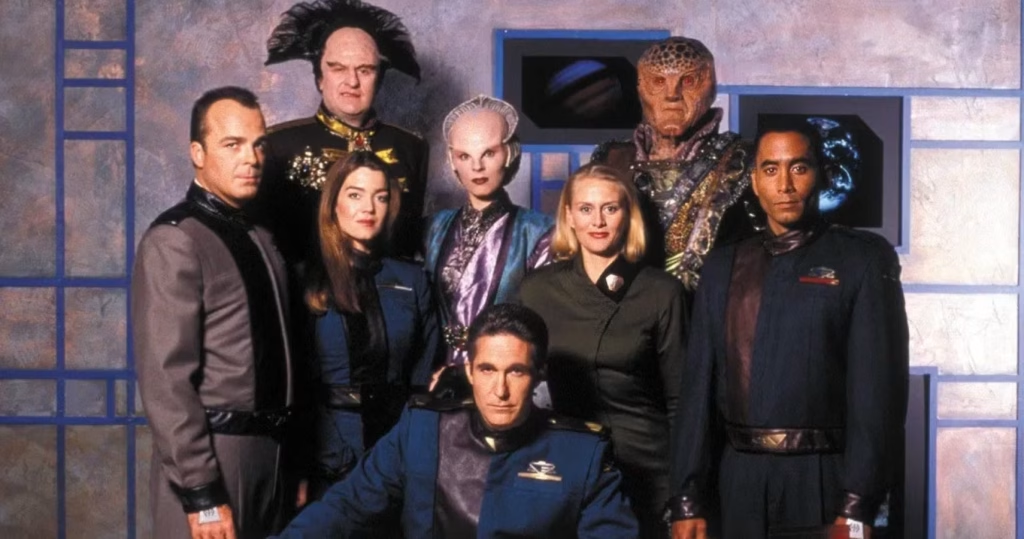
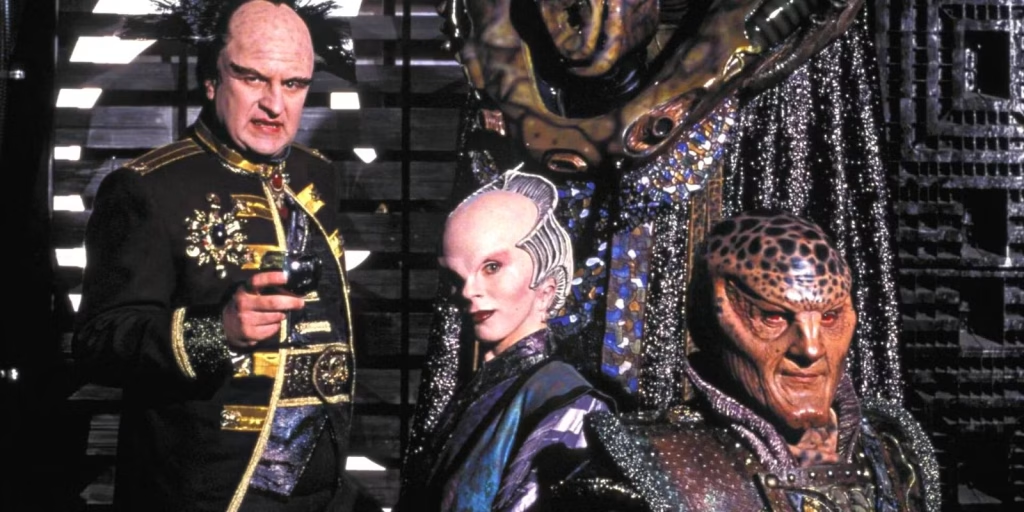
Babylon 5 remains a landmark in science fiction television. Set on a neutral space station, the series weaves politics, war, religion, and identity into a long-form narrative that was ahead of its time.

Despite limited mainstream recognition, its ambitious storytelling and character arcs earned it a devoted fan base. Many modern sci-fi shows owe a debt to their serialized approach. For viewers who love deep lore and moral complexity, Babylon 5 is essential.
From intimate animated shorts to galaxy-spanning epics, modern sci-fi is proving that imagination and emotional depth go hand in hand. These films and shows don’t just ask “what if?” They ask why it matters. And right now, there’s no better time to dive in.