


The zombie genre has never been short on blood, chaos, or bleak worldviews, but every once in a while, a film comes along that reminds us why the undead still matter. 28 Years Later: The Bone Temple isn’t just another sequel shambling forward on franchise momentum—it’s a strange, daring, and deeply unsettling evolution of a series that has always thrived on discomfort. What follows is a reimagining of that madness, one that leans into philosophy, satire, cruelty, and unexpected tenderness, all while keeping its foot firmly on the accelerator.

From the very beginning, the 28 Days Later franchise has refused to play by the rules of traditional zombie cinema. Danny Boyle’s original film shattered expectations with its rage-fueled, infected, jittery, anxiety-inducing energy. Over two decades later, 28 Years Later: The Bone Temple proves that the series still has no interest in calming down. Instead, it pushes further into narrative chaos, turning what was once survival horror into something far stranger—a reflection on belief systems, memory, and the terrifying adaptability of humanity itself.

What’s remarkable about The Bone Temple is how confidently it embraces its own instability. This isn’t a sequel trying to recreate past glories shot-for-shot. It understands that the world has changed, the audience has changed, and horror must evolve with it. The film leans into unpredictability, allowing its story to spiral into cult behavior, warped nostalgia, and emotional contradictions that feel uncomfortably close to our own reality.

As the second installment in a planned trilogy, The Bone Temple carries the burden of being a narrative bridge. Middle chapters are notorious for feeling like connective tissue rather than complete stories, but this film refuses to settle for that role. Instead of laying groundwork quietly, it explodes outward, using its position to take risks that a first or final chapter might avoid. The result is a film that feels reckless in the best sense of the word.
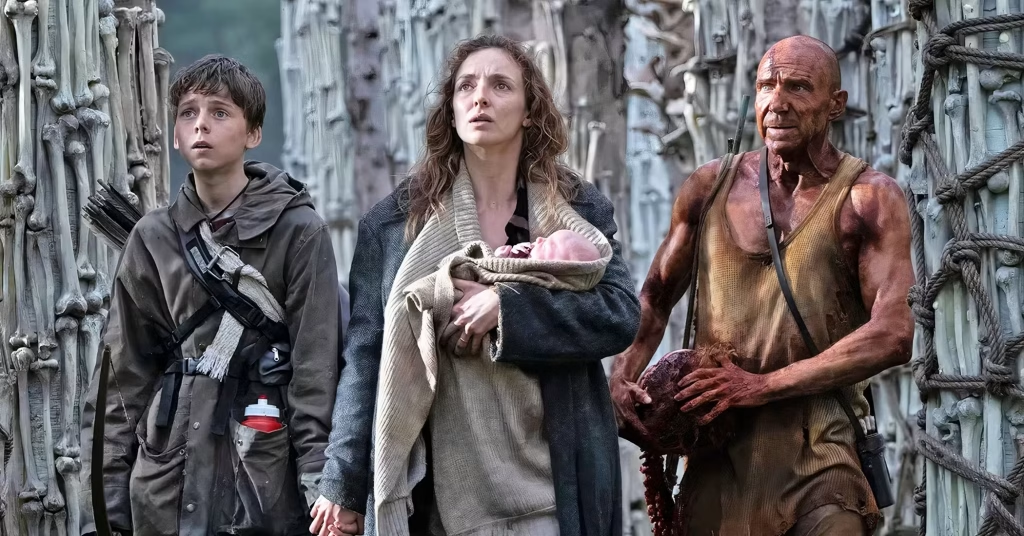
Picking up directly after the events of 28 Days Later, the story wastes no time throwing viewers back into uncertainty. Young Spike’s journey takes a sharp left turn when he encounters a cult-like group obsessed with relics of the past. From that moment on, the film abandons any illusion of safety. It signals early that this world is no longer governed by survival logic alone, but by belief, performance, and desperation.
Director Nia DaCosta brings a markedly different energy to the franchise, and that contrast works to the film’s advantage. Where Danny Boyle favored frantic movement and sensory overload, DaCosta opts for control and patience. Her camera lingers on faces, on rituals, on spaces that feel wrong long before violence erupts. This slower approach doesn’t dull the horror—it sharpens it, allowing dread to accumulate until it becomes unbearable.

Visually, The Bone Temple feels more composed, almost ceremonial. Long takes and deliberate framing give the apocalypse a strange elegance, as if the end of the world has settled into a ritualistic rhythm. This aesthetic choice reinforces the film’s themes, suggesting that chaos doesn’t always look chaotic. Sometimes it organizes itself, dresses itself up, and demands to be respected.

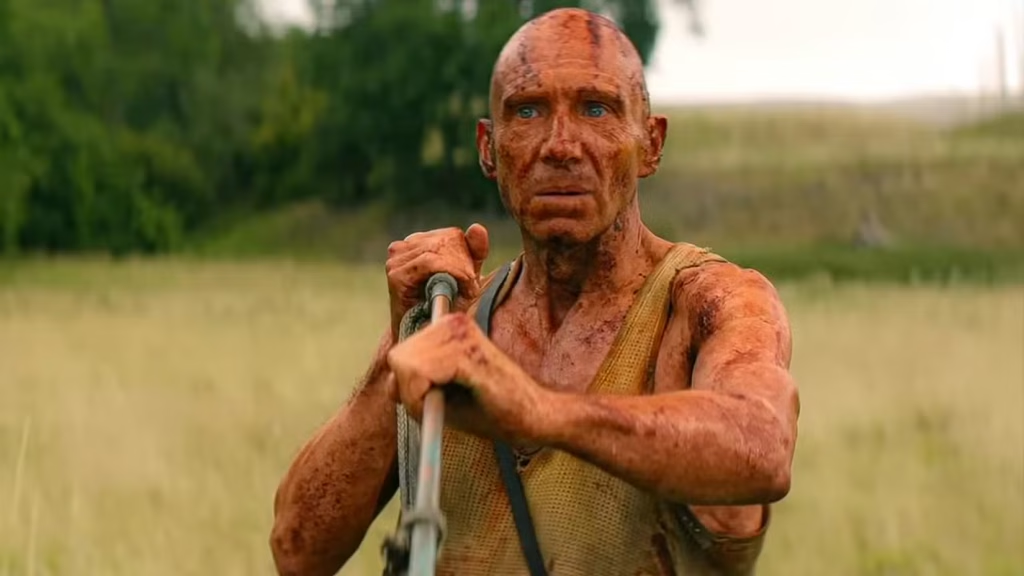
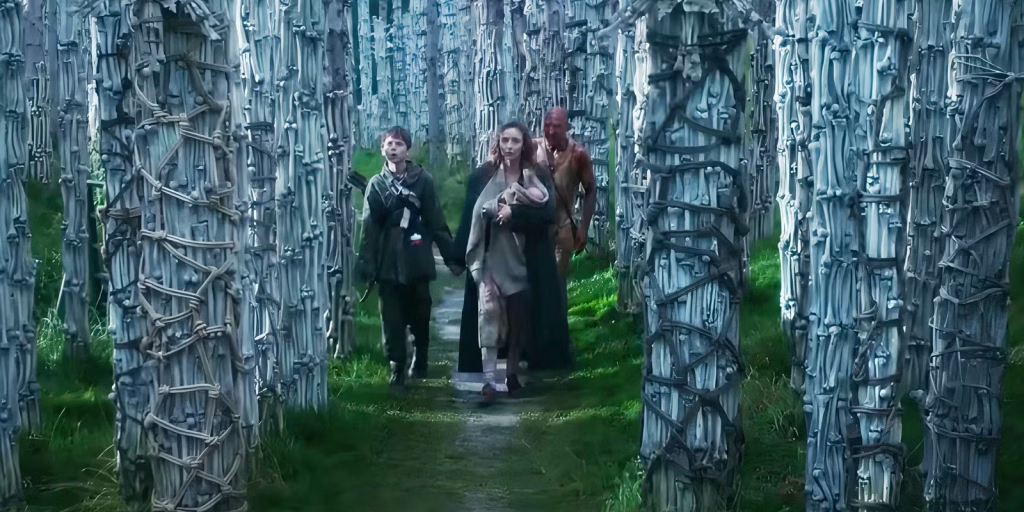
At the emotional core of the film is Ralph Fiennes’ Dr. Ian Kelson, a character who could have easily become a caricature but instead becomes the story’s most haunting presence. Kelson is a scientist, an artist, and a deeply broken man, trying to impose meaning on a world that has stripped it away. His obsession with bones is both literal and symbolic—a way of preserving what remains when everything else rots.

Fiennes plays Kelson with a balance of eccentricity and sincerity that makes him impossible to dismiss. Watching him carefully clean bones or speak softly to infected individuals is unsettling, but never mocking. There’s compassion in his madness, and that compassion forces the audience to question where humanity truly ends in a world overrun by monsters.

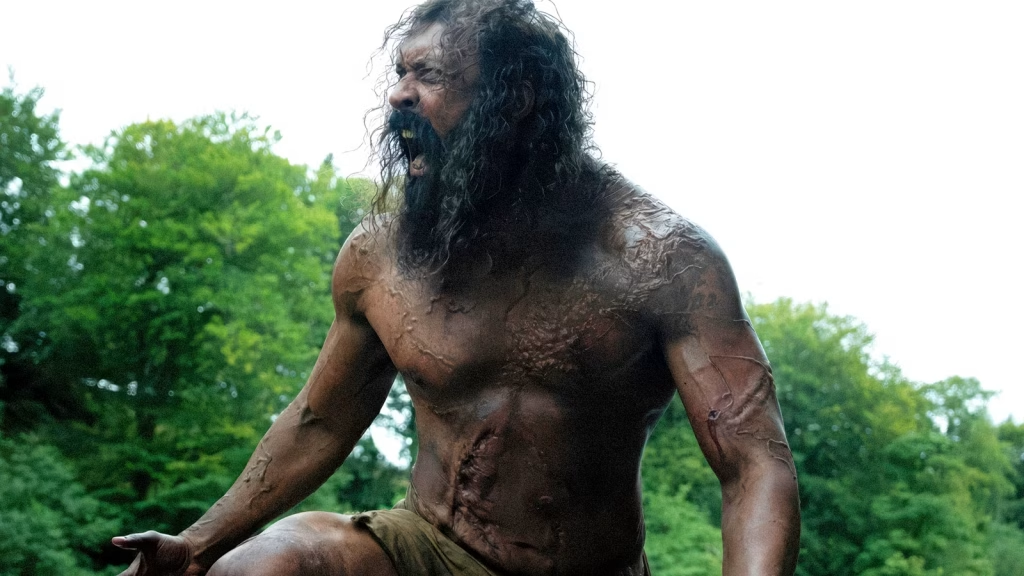
Kelson’s relationship with Samson, an infected man portrayed with surprising sensitivity by Chi Lewis-Parry, is one of the film’s most affecting elements. Their bond challenges the binary of human versus monster, suggesting that identity may persist even after transformation. These scenes slow the film down, allowing moments of empathy to exist in a genre that often prioritizes spectacle over soul.
On the opposite end of the moral spectrum is Sir Lord Jimmy Crystal, played with unnerving charisma by Jack O’Connell. Jimmy isn’t just a villain; he’s a performance. O’Connell portrays him as a grotesque blend of entertainer, preacher, and tyrant, a man who understands that power in the apocalypse comes from controlling stories as much as resources.

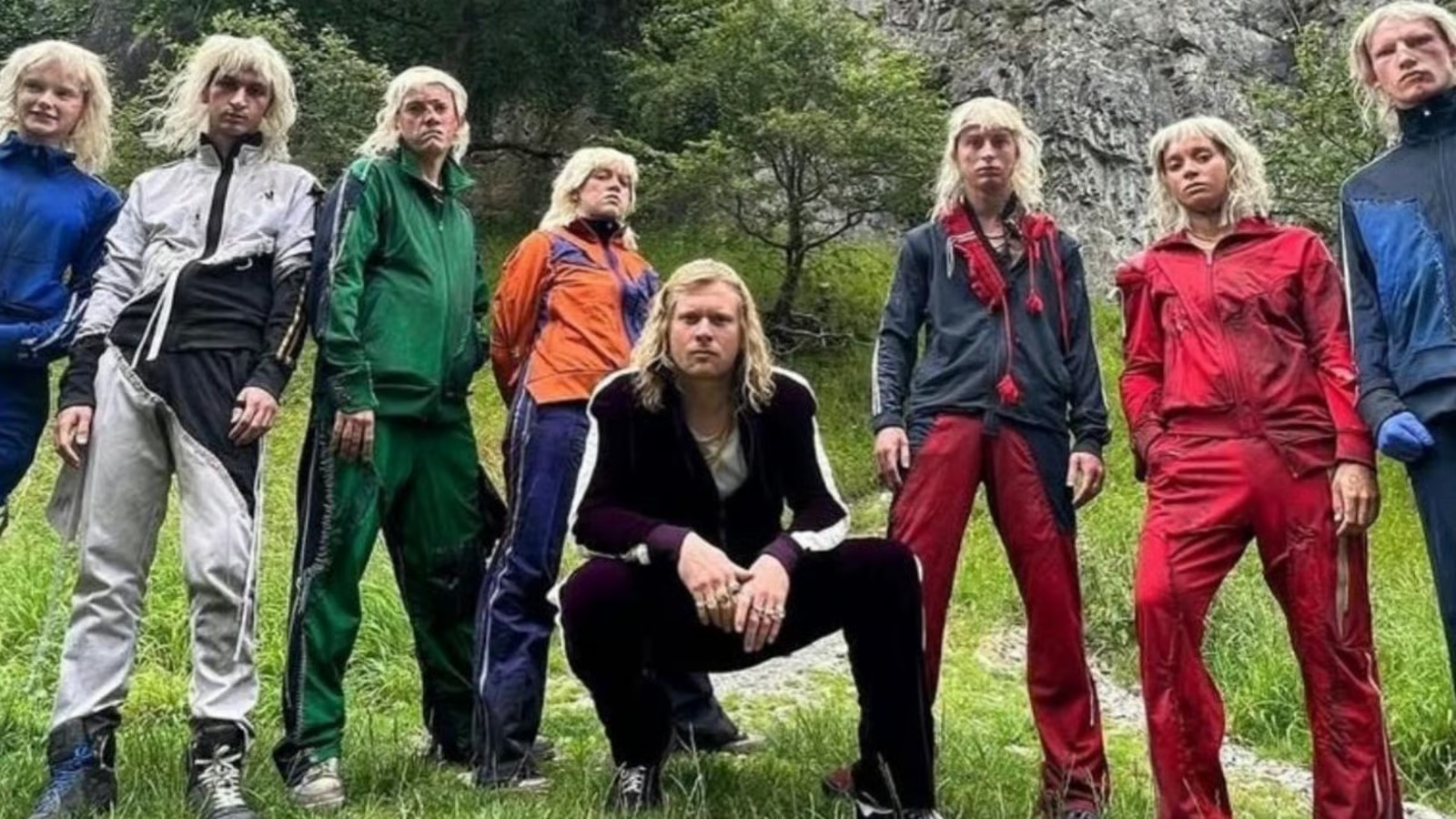
Jimmy’s cult, known simply as the Jimmies, is one of the film’s most unsettling inventions. Dressed in tracksuits and blonde wigs, they parody childhood nostalgia while weaponizing it. Their rituals feel absurd until they suddenly feel terrifying, revealing how easily comfort can be twisted into control when people are desperate for meaning.
The choice to base the cult’s imagery on a disgraced public figure from pre-collapse Britain adds another layer of discomfort. The film uses this misremembered past to explore how societies cling to symbols without understanding their true histories. It’s a sharp critique of nostalgia itself—how selective memory can become dangerous when truth no longer matters.

Spike, portrayed by Alfie Williams, remains the audience’s emotional anchor, even when the story shifts focus away from him. His youth and vulnerability highlight the cost of this broken world, reminding viewers that innocence doesn’t disappear—it gets exploited. Spike’s quiet reactions often say more than any speech could.
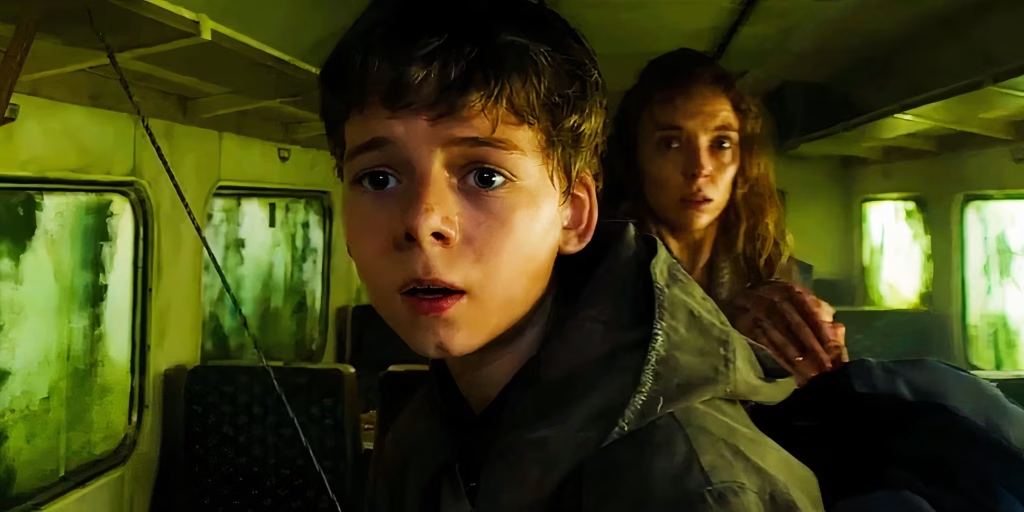
His interactions with Jimmy Ink, played by Erin Kellyman, provide brief but meaningful moments of connection. These scenes don’t promise salvation, but they offer something just as rare in this universe: understanding. In a film obsessed with belief systems, these personal connections feel radical.

Worldbuilding has always been a strength of the 28 franchise, and The Bone Temple expands it in unsettling ways. Rather than focusing on governments or resistance movements, the film zeroes in on micro-societies—cults, partnerships, rituals—that spring up when larger structures collapse.

The Jimmies’ pseudo-charitable acts are especially disturbing. Their belief that cruelty can coexist with generosity reflects a frighteningly real human tendency to justify harm through ideology. The film makes it clear that the infected are not the greatest threat; unchecked belief is.
Violence in The Bone Temple is handled with precision rather than excess. When gore appears, it feels earned and devastating. The infamous barn sequence is particularly difficult to watch, not because of graphic content alone, but because of how calmly the violence is framed.

DaCosta refuses to sensationalize suffering. Instead, she lets scenes unfold with uncomfortable restraint, forcing the audience to sit with the consequences. This approach makes the horror linger long after the screen cuts to black.
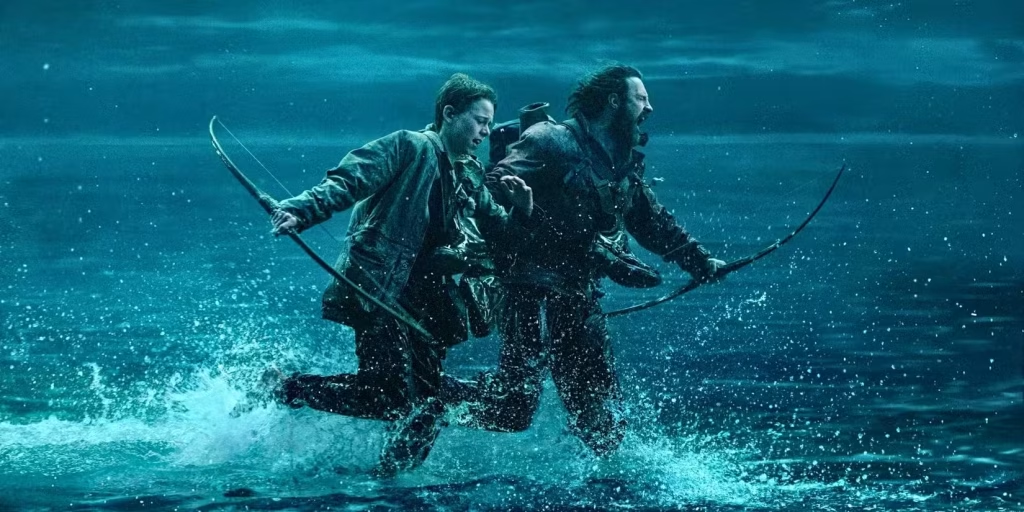
Despite its darkness, the film frequently dips into grim humor. These moments aren’t comic relief so much as survival mechanisms, reflecting how people cope with unbearable realities. Kelson’s bizarre bonding rituals and the Jimmies’ warped catchphrases are funny until they suddenly aren’t.
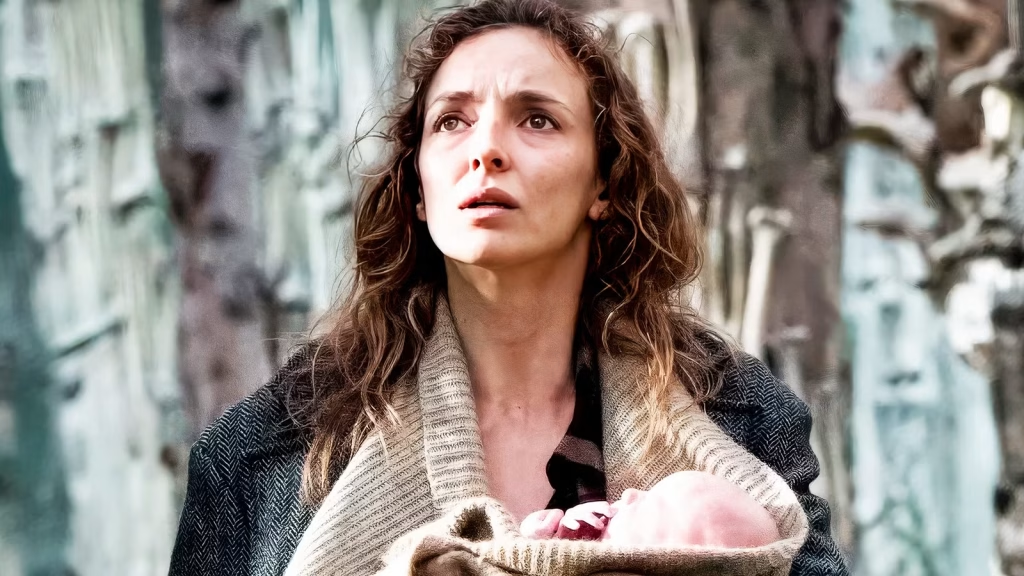
This tonal instability shouldn’t work, but it does. The film understands that fear and laughter often exist side by side, especially in times of crisis. By embracing that contradiction, The Bone Temple feels disturbingly honest.

Like the best zombie stories, this film uses the undead as a metaphor rather than a threat alone. Here, zombies represent stagnation, unresolved trauma, and the danger of clinging to the past instead of confronting the present.

The film repeatedly asks difficult questions without offering neat answers. How do people regain control when the world no longer makes sense? How do belief systems form when truth becomes optional? These questions resonate far beyond the screen.

What makes The Bone Temple feel especially relevant is how closely its themes mirror modern anxieties. Misinformation, performative leadership, and nostalgia-driven politics all find disturbing echoes in the film’s world.

Critics have largely embraced the film’s ambition, praising its willingness to alienate as much as entertain. While it may frustrate viewers expecting a straightforward zombie thriller, it rewards those willing to engage with its ideas.
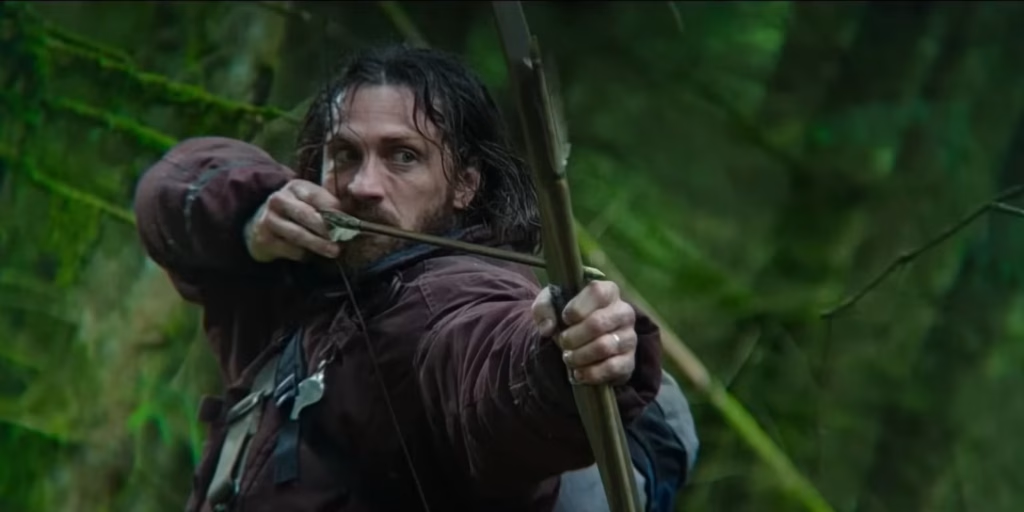
Some fans may miss the wider geopolitical scope of earlier entries, but The Bone Temple compensates by diving deeper into psychology and belief. Its focus is narrower, but far more intense.

As a middle chapter, the film does more than set up future events—it redefines the franchise’s emotional and philosophical core. It expands what a zombie movie can be without abandoning the genre entirely.

Ralph Fiennes’ performance alone would justify the film’s existence, but it’s the ensemble that elevates it. Every character feels like a response to the same question: how do you stay human when humanity has collapsed?

Visually striking, emotionally challenging, and frequently disturbing, The Bone Temple refuses to be passive entertainment. It demands attention, patience, and reflection, qualities increasingly rare in blockbuster horror. In a genre crowded with repetition, this film dares to be strange. It embraces discomfort, ambiguity, and contradiction, trusting the audience to keep up rather than spoon-feeding easy thrills.
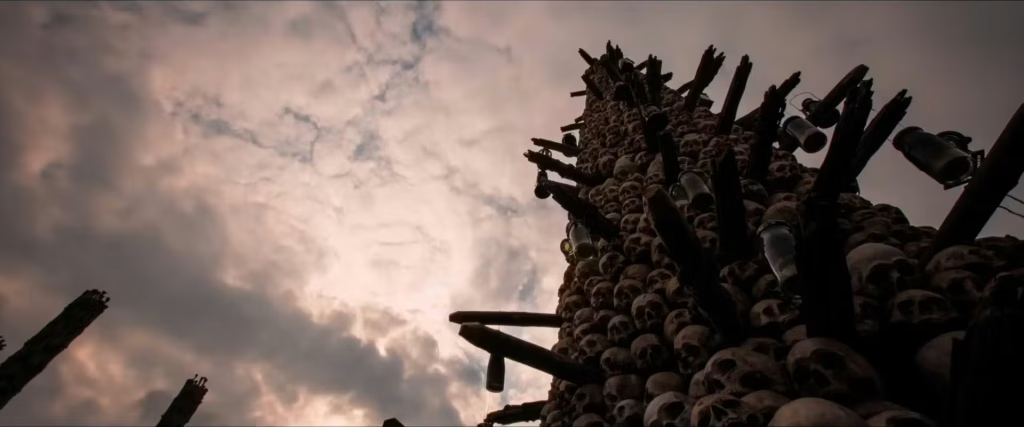
Whether you view it as horror, satire, or philosophical provocation, 28 Years Later: The Bone Temple stands as one of the boldest zombie films in years. It proves that the undead still have something vital to say—if filmmakers are brave enough to listen.

The Bone Temple isn’t just about surviving the apocalypse—it’s about what we build in its aftermath. By blending horror with dark humor and unsettling introspection, the film reminds us that the scariest thing in any ruined world isn’t the monsters roaming outside, but the beliefs we choose to cling to when everything else falls apart.