

The Hollywood blacklist remains one of the most troubling chapters in entertainment history. During the Red Scare, careers were derailed not always by proven actions, but by suspicion, association, or refusal to cooperate with investigators. Actors, writers, musicians, and directors found themselves shut out of the industry almost overnight. Yet for many of them, the story didn’t end there. Some endured prison sentences, others lost years of work, and a few made painful compromises to survive. But nearly all left behind legacies that outlasted the era that tried to silence them. Here are 16 Hollywood legends who were blacklisted, and how they pushed back.

16. Val Kilmer
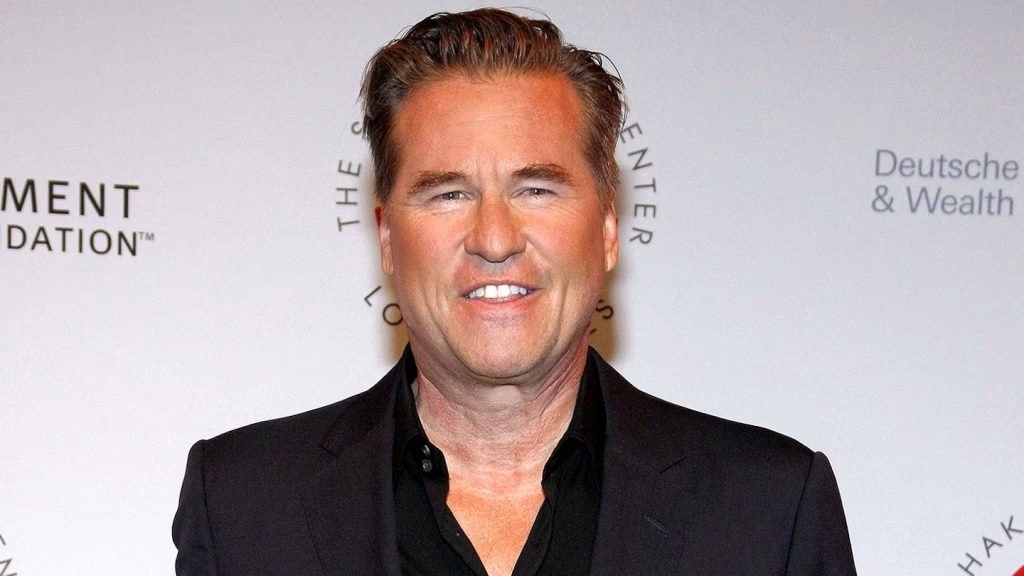
Val Kilmer, known for transformative performances as Jim Morrison in The Doors and Iceman in Top Gun, later claimed that his career slowdown wasn’t accidental. He believed his outspoken personality and unwillingness to conform to Hollywood’s expectations led to years of professional exile.
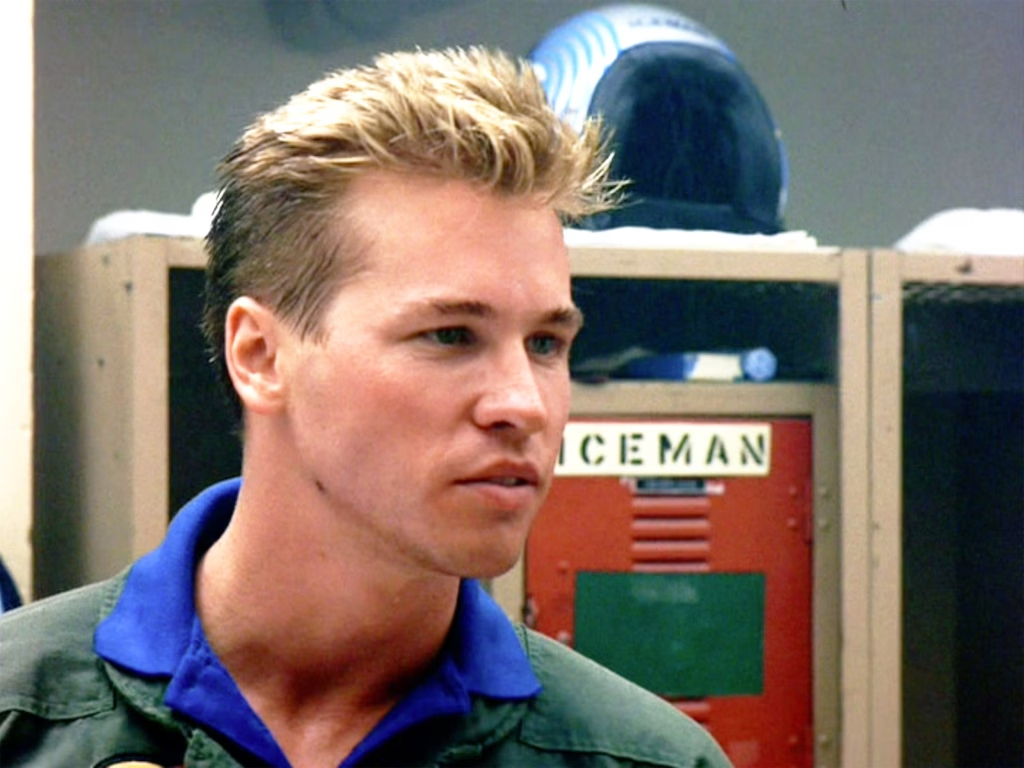
Kilmer reflected that the industry prefers its stars agreeable and quiet, and he admitted somewhat ruefully that he learned that lesson late. Though he faced a long stretch without major roles, his eventual return in Top Gun: Maverick reminded audiences of his enduring talent. His career stands as a modern example of how Hollywood can still sideline those who refuse to play along.

15. Lee Grant
Lee Grant’s career was soaring when it suddenly came to a halt. After earning an Oscar nomination for her film debut, she was blacklisted during the Red Scare because her husband had been identified as a Communist. When called before HUAC, she refused to name others, knowing it would cost her work.

For over a decade, she was effectively barred from film and television. But Grant didn’t disappear; she redirected her energy to the stage and later returned with renewed purpose. She went on to win an Academy Award and became a pioneering female director, proving that integrity and perseverance could outlast political persecution.

14. Lloyd Bridges
Lloyd Bridges, beloved for roles ranging from Sea Hunt to Airplane!, faced a temporary derailment in the 1950s. His admission that he had once belonged to a group with Communist ties was enough to attract scrutiny and pause his career.

Though he was eventually cleared and returned to steady work, the episode reflected the climate of fear that defined the era. Even minor associations could spark suspicion, and Bridges’ experience illustrates how quickly reputations could be damaged during the Red Scare.

13. Dashiell Hammett
The legendary crime writer behind The Maltese Falcon, Dashiell Hammett, was openly affiliated with the Communist Party. When questioned, he invoked the Fifth Amendment and refused to answer inquiries about his political ties.

His refusal led to a contempt charge and time in prison. Beyond that, the blacklist severely limited his ability to work in Hollywood and publish freely. Hammett’s ordeal shows how writers, not just performers, were targeted when their ideas were deemed threatening.

12. Artie Shaw
Clarinet virtuoso and bandleader Artie Shaw attended Communist meetings, later claiming his interest was rooted in social justice rather than party loyalty. That distinction mattered little in the charged atmosphere of the time.

His career suffered as suspicion followed him. The damage extended beyond lost opportunities; it cast doubt over his public image. Shaw’s experience underscores how even curiosity or peripheral involvement could trigger long-lasting consequences.

11. Uta Hagen
Acclaimed stage actress Uta Hagen became entangled in the blacklist largely because of her association with Paul Robeson. Though she was not a major film star, the shadow of suspicion narrowed her opportunities in television and cinema.

Hagen turned her focus to theater and teaching, where she built a formidable legacy as an acting instructor. While Hollywood doors closed, she reshaped the craft from the stage, proving that artistic influence can survive institutional rejection.

10. Judy Holliday
Oscar-winning actress Judy Holliday, celebrated for Born Yesterday, found herself blacklisted from radio and television at the height of her fame. Her comedic brilliance was suddenly overshadowed by political suspicion.

Though she continued performing on Broadway, her screen career never fully regained its earlier momentum. Holliday’s story reflects how abruptly the blacklist could halt even the brightest rising stars.

9. Burl Ives
Folk singer and actor Burl Ives was scrutinized for his involvement in labor organizations. He denied Communist affiliation and ultimately cooperated with HUAC, which helped him return to mainstream work.

However, that cooperation strained relationships within the folk community. Some peers saw his testimony as betrayal. Ives’ story reveals the impossible moral choices many artists faced—protect your livelihood, or protect your community.

8. John Garfield
John Garfield, known for intense performances in films such as The Postman Always Rings Twice, refused to name names when questioned by HUAC. His stance effectively ended his film career.

The stress of the ordeal weighed heavily on him, and he died young, his health reportedly affected by the strain. Garfield’s experience stands as one of the era’s most tragic examples of personal and professional devastation.

7. Dorothy Parker
Writer and critic Dorothy Parker, famed for her razor-sharp wit, was monitored by the FBI for years. Her activism and contributions to left-leaning publications drew government attention.

The scrutiny limited her Hollywood opportunities and cast a shadow over her later career. Parker’s case demonstrates that the blacklist extended beyond actors—it targeted thinkers and writers whose words challenged authority.

6. Leonard Bernstein
Composer and conductor Leonard Bernstein was never formally blacklisted, but suspicions about his political sympathies placed him under scrutiny. In an atmosphere of paranoia, even indirect associations could threaten a career.

Despite this, Bernstein continued composing, conducting, and teaching, becoming one of America’s most influential musical figures. His resilience highlights how some artists managed to thrive despite the climate of fear.

5. Gypsy Rose Lee
Burlesque icon Gypsy Rose Lee attended meetings connected to leftist causes, which brought her to HUAC’s attention. Even limited involvement could lead to professional consequences.

Her work in film and television slowed, though she remained a cultural presence. Lee’s story illustrates how widely the net was cast during the Red Scare, ensnaring performers from every corner of show business.

4. Pete Seeger
Folk legend Pete Seeger openly acknowledged his Communist ties but refused to implicate others. His refusal led to a contempt conviction, later overturned, and years of limited mainstream exposure.

Though barred from major media platforms, Seeger continued performing at grassroots events and remained a powerful voice for social change. His music endured, carried by communities rather than corporations.

3. Arthur Miller
Playwright Arthur Miller refused to name suspected Communists when summoned before HUAC. His resistance mirrored the themes of conscience and moral courage in his plays.
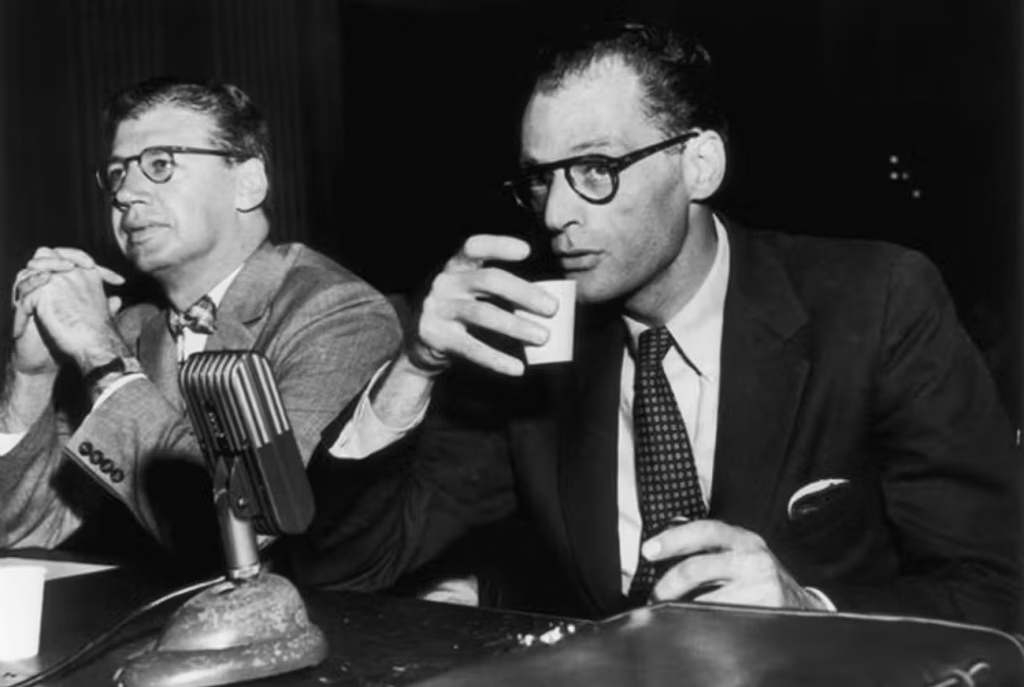
Though blacklisted, Miller continued writing, producing works that directly addressed hysteria and injustice. His art became a form of protest, cementing his place as a towering figure in American literature.

2. Langston Hughes
Poet Langston Hughes was linked to Communist-affiliated groups, and his work occasionally appeared in leftist publications. This association brought scrutiny during the Red Scare.

Despite pressure, Hughes continued exploring themes of racial inequality, hope, and resilience in his writing. His voice endured, transcending the political moment that sought to limit it.

1. Lena Horne
Singer and actress Lena Horne was labeled a Communist sympathizer due to her civil rights activism and connection to Paul Robeson. The blacklist curtailed her film and television opportunities for years.

Yet Horne refused to retreat. She continued performing and speaking out, becoming a symbol of both artistic excellence and social justice. Her career reflects courage under pressure—and a refusal to let fear define her legacy.

The Hollywood blacklist left deep scars on the entertainment industry. Careers were interrupted, friendships fractured, and lives altered by suspicion and political panic. But history has a long memory, and it tends to remember courage.

These artists remind us that creative voices cannot be permanently silenced. Whether through quiet endurance or open defiance, they fought back in the ways they could. Their stories endure not only as warnings about fear-driven persecution but as testaments to resilience in the face of it.