


Growing up in Hollywood isn’t always as glamorous as it looks. For many young performers, fame arrives before adulthood and sometimes before they’re ready to manage the complicated family and financial pressures that come with it. While most child actors rely heavily on parental guidance, some find themselves needing legal independence instead. Emancipation is a serious and often emotional decision. For these 15 former child stars, it marked a turning point, a step toward autonomy, control over their careers, and in some cases, protection from unhealthy environments. Here’s how their stories unfolded.

15. Drew Barrymore
Born into a legendary acting dynasty, Drew Barrymore was practically destined for the spotlight. After her breakout performance in E.T. the Extra-Terrestrial, she became one of the most recognizable child stars in the world. But behind the red carpets and flashing cameras, her childhood was deeply unstable, shaped by early exposure to adult environments and complicated family relationships.

Seeking control over her life, Barrymore pursued legal emancipation as a teenager. The decision allowed her to manage her finances and career without parental authority. It wasn’t just a legal change; it marked the beginning of her rebuilding process. Over time, she transformed from a troubled teen into a respected actress, producer, and talk show host, proving that early independence can sometimes lead to lasting strength.

14. Macaulay Culkin
Few child actors have experienced fame as Macaulay Culkin did after starring in Home Alone. Practically overnight, he became one of the most bankable young stars in Hollywood. But massive paychecks and sudden fame created tension within his family, especially when disputes over his earnings surfaced publicly.

As legal battles between his parents intensified, Culkin filed for emancipation to protect his fortune and regain control of his career. The court ultimately granted him financial independence, allowing him to step back from acting and reassess his life on his own terms. His story remains one of the most widely discussed examples of why financial protections for child actors are so crucial.

13. Ariel Winter
Best known for playing Alex Dunphy on Modern Family, Ariel Winter grew up in front of millions of viewers. However, off-camera, she faced a very public legal dispute with her mother, which brought serious allegations into the spotlight.

Winter sought emancipation as part of her effort to separate from that situation and gain legal independence. After demonstrating that she could financially support herself and handle adult responsibilities, the court granted her request. Since then, she has spoken openly about mental health, boundaries, and the importance of protecting young performers in the industry.

12. Michelle Williams
Long before she was an Oscar-nominated actress, Michelle Williams was a working teen performer trying to navigate Hollywood. She made the strategic decision to pursue emancipation to bypass certain work restrictions that apply to minors in the entertainment industry.

That legal independence gave her the freedom to sign contracts and take on more mature roles without parental approval. It wasn’t driven by family scandal but by ambition and practicality. Williams’ early decision allowed her to carefully build the thoughtful, critically acclaimed career she’s known for today.

11. Laura Dern
Laura Dern began acting at a young age, appearing in films while still a teenager. Determined to expand her opportunities, she sought emancipation so she could accept roles that required adult working hours and legal responsibility.

With independence came the ability to negotiate her own contracts and steer her career in bold directions. Rather than being boxed into limited options, Dern pursued complex, unconventional characters. Her early autonomy helped shape the fearless performer audiences admire today.

10. Jena Malone
Jena Malone has always been known for her artistic edge and independent streak. As a teenager working in film, she pursued emancipation to take charge of her finances and career decisions.

The process required her to prove she could support herself, but once granted, it opened creative doors. Malone explored diverse projects and carved out a career defined by unconventional choices. For her, emancipation wasn’t just legal paperwork; it was creative liberation.

9. Corey Feldman
Corey Feldman became a defining face of ’80s cinema with roles in The Goonies and Stand by Me. Despite his success, he later revealed troubling issues involving financial mismanagement and exploitation during his youth.

Seeking to regain control, Feldman pursued emancipation to separate himself from harmful influences and protect his income. In adulthood, he became an outspoken advocate for child actor protections, using his own painful experiences to push for reform within the industry.

8. Edward Furlong
Edward Furlong skyrocketed to fame after his breakout role in Terminator 2: Judgment Day. The sudden attention and financial success created instability within his family life.

Amid disputes over money and management, Furlong sought emancipation to oversee his own career and earnings. Though his path in Hollywood had its ups and downs, gaining legal independence gave him authority over his professional decisions during a turbulent time.
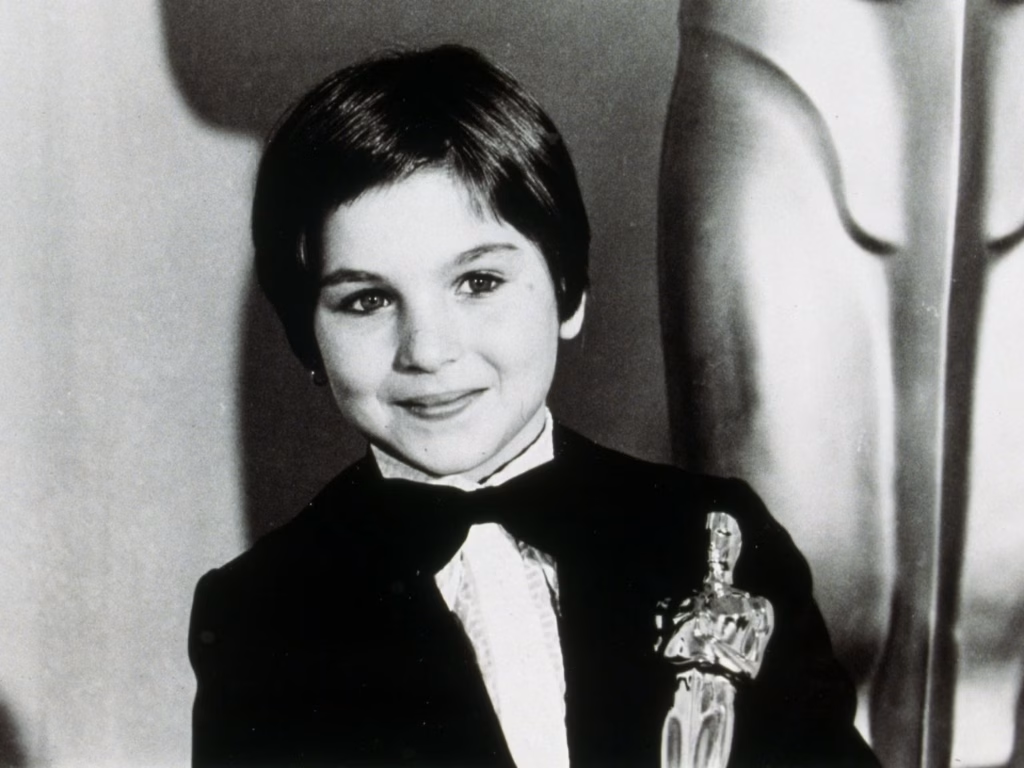
7. Tatum O’Neal
Tatum O’Neal made history as the youngest Academy Award winner for her role in Paper Moon. Yet behind that groundbreaking achievement was a strained and highly publicized relationship with her father.

Emancipation allowed O’Neal to distance herself from that dynamic and attempt to build stability on her own. Growing up so publicly came with enormous pressure, but her story reflects both the cost of early fame and the resilience required to survive it.

6. LeAnn Rimes
LeAnn Rimes was still a teenager when she dominated country music charts. With major success came financial disputes involving her parents, who had been managing her career.

To safeguard her earnings and future, Rimes sought emancipation. Once granted, she gained control over her contracts and professional direction. Her case became one of the most notable examples of young musicians fighting for financial autonomy.

5. Mischa Barton
Mischa Barton found fame at a young age, particularly for her breakout role on The O.C. But as her profile rose, tensions regarding management and decision-making also surfaced.

Pursuing emancipation allowed Barton to step out from under parental oversight and guide her own career. The move gave her control over contracts and public appearances, empowering her to define her path forward.

4. Courtney Love
Courtney Love’s early life was marked by instability long before she became the frontwoman of Hole. As a teenager, she sought emancipation to escape a turbulent home environment.

Legal independence enabled her to pursue music and creative expression without restriction. For Love, emancipation was less about Hollywood contracts and more about survival and self-determination during a chaotic period of her life.

3. Eliza Dushku
Eliza Dushku began acting as a minor and quickly found steady work in television and film. Wanting greater flexibility in accepting roles, she sought emancipation to avoid the limitations placed on minors in the industry.

After gaining independence, Dushku continued building a solid career while maintaining control over her professional decisions. Her case highlights how emancipation can sometimes be a calculated career move rather than a reaction to family conflict.

2. Bijou Phillips
Growing up in a well-known entertainment family, Bijou Phillips experienced the complexities of fame early on. Seeking autonomy, she pursued emancipation to make independent choices about her modeling and acting work.

With legal freedom, Phillips carved out her own identity separate from her family’s legacy. While her career took various turns, emancipation gave her authority over both her finances and personal direction.

1. Rose McGowan
Rose McGowan entered the entertainment world young and quickly realized she wanted control over her own future. Emancipation allowed her to separate legally from parental authority and make independent decisions.

That independence later shaped her evolution into not just an actress, but an outspoken activist. McGowan has used her voice to challenge systemic issues in Hollywood, proving that early self-determination can fuel lifelong advocacy.

For child stars, growing up in the public eye can blur the lines between family, business, and personal identity. Emancipation is never a small decision; it often reflects deeper struggles, ambition, or the urgent need for protection. While each story is different, these former child stars share one common thread: they fought for control over their own lives. And in an industry where power dynamics can easily shift, that independence can make all the difference.