


Not every unforgettable character wears a white hat. Some of the most fascinating figures in television and film live in the gray area, making terrible choices for understandable reasons, or fighting for causes that twist them into villains. We may not agree with what they do, but we understand why they do it. And that’s what keeps us watching. Here are 15 anti-heroes and misunderstood antagonists who completely stole the spotlight.

15. Tony Soprano (The Sopranos)
Tony Soprano changed television forever. As a mob boss juggling crime, family life, and panic attacks, he’s both terrifying and strangely relatable. One moment, he’s ordering a hit; the next,t he’s opening up to his therapist about childhood trauma. That emotional duality is what makes him so gripping. We see his brutality, but we also see his anxiety, insecurity, and desperate need for control. Tony forced audiences to confront an uncomfortable truth: sometimes we root for people we know we shouldn’t.

14. Walter White (Breaking Bad)
Walter White begins as a desperate man trying to secure his family’s future. A cancer diagnosis pushes him into the drug trade, but power is what keeps him there. Watching Walt evolve from mild-mannered teacher to ruthless kingpin is both thrilling and horrifying. Even when his ego takes over and he becomes undeniably villainous, viewers remain invested. His slow moral collapse is one of TV’s most unforgettable character studies.

13. Wanda Maximoff (Marvel Cinematic Universe)
Wanda’s story is fueled by loss. From grieving sister to grieving mother, every turn in her journey is shaped by heartbreak. In WandaVision and beyond, her grief pushes her to cross dangerous lines. Yet it’s impossible not to empathize with her pain. Wanda embodies how love, when tangled with trauma, can turn even a hero into something far more complicated.

12. Damon Salvatore (The Vampire Diaries)
Damon is sharp-tongued, reckless, and often morally questionable, but he’s also fiercely loyal and capable of deep love. His dark past and constant battle between selfish impulses and genuine care make him more than just the “bad brother.” Damon thrives in that messy in-between space where charm and chaos collide.

11. Loki (Marvel Cinematic Universe)
Loki lives for mischief, but underneath the sarcasm and schemes is someone aching to belong. Whether he’s trying to seize a throne or save reality itself, his motivations often circle back to identity and validation. That vulnerability, paired with his wit, turned him from a one-note villain into one of Marvel’s most beloved anti-heroes.

10. Killmonger (Black Panther)
Killmonger isn’t driven by random cruelty; he’s fueled by anger rooted in real injustice. His pain stems from abandonment and systemic oppression, and his desire to right those wrongs feels painfully human. His methods are extreme, but his perspective forces audiences to confront uncomfortable truths. Few villains spark as much debate or sympathy as he does.

9. Jaime Lannister (Game of Thrones)
When we first meet Jaime, he’s easy to despise. But over time, layers peel back. His bond with Brienne reveals honor beneath the arrogance. His struggle to redefine himself outside of his family’s shadow makes him one of the series’ most complex arcs. Jaime reminds us that redemption isn’t always clean or guaranteed.

8. Sandor “The Hound” Clegane (Game of Thrones)
Gruff, violent, and emotionally guarded, the Hound seems like a lost cause at first glance. But throughout the series, glimpses of reluctant compassion emerge. His personal demons don’t disappear, but his attempts to change feel real. His journey proves that growth doesn’t have to be graceful to matter.
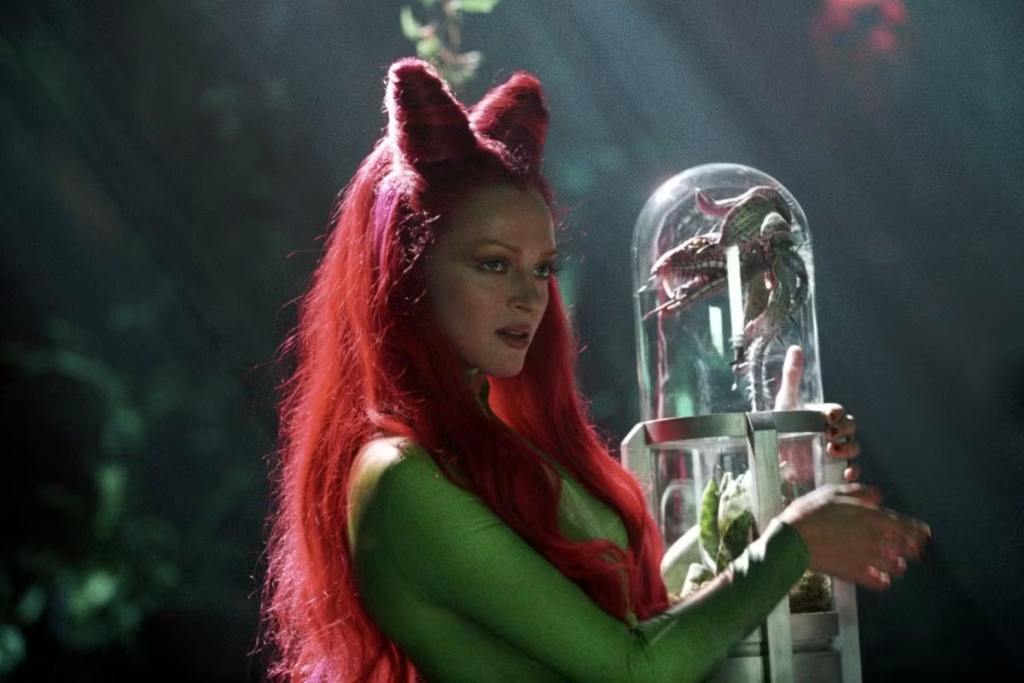
7. Poison Ivy (Batman Franchise)
Poison Ivy sees herself as a protector, not a villain. Her loyalty lies with the planet, even if that means destroying those who harm it. She’s driven by conviction, not chaos. In many ways, she’s a distorted reflection of the heroes she opposes, fighting for justice, just with far fewer limits.

6. Squidward Tentacles (SpongeBob SquarePants)
Squidward may be cranky, but he’s also painfully relatable. He’s an artist stuck in a job he hates, constantly interrupted by an overly cheerful coworker. From his point of view, he’s not evil, just exhausted. His dry sarcasm and longing for peace make him one of the most unexpectedly sympathetic characters in animation.

5. Dr. Zaius (Planet of the Apes)
Dr. Zaius resists humanity not out of hatred, but fear, fear rooted in history. He knows what humans once did to the world, and his caution isn’t entirely misplaced. His tragic flaw is that in trying to prevent disaster, he contributes to it. He’s proof that being wrong doesn’t always mean being unreasonable.

4. Benny (Rent)
Often labeled the antagonist, Benny is more layered than he appears. He offers opportunities and support to his old friends, even as his ambitions clash with theirs. His actions aren’t purely selfish, nor entirely selfless. He represents the complicated space between loyalty and survival in a changing world.

3. Murderbot (The Murderbot Diaries)
Murderbot would rather stream shows than interact with humans, but it keeps saving them anyway. Its struggle isn’t about world domination; it’s about autonomy and identity. Sarcastic and socially awkward, Murderbot’s reluctant heroism makes it one of sci-fi’s most refreshingly human non-humans.

2. Homelander (The Boys)
Homelander wears the costume of a hero, but his need for control and admiration reveals something far darker. He’s a walking warning about unchecked power and celebrity worship. Terrifying yet mesmerizing, Homelander embodies the danger of believing your own hype.

1. Why We’re Drawn to the Gray Area
At the core of every great anti-hero or misunderstood villain is perspective. These characters challenge us to look beyond labels and consider motives, trauma, and circumstance. They’re flawed, unpredictable, and often contradictory, just like real people. That’s why they resonate. In a world that’s rarely black and white, these morally complex characters feel honest.

The best stories don’t always give us heroes to admire; they give us people to understand. Anti-heroes and misunderstood villains hold up a mirror to our own complexities, forcing us to question where the line between right and wrong truly lies. And maybe that’s why we can’t look away.