


From hand-animated monsters to cutting-edge digital worlds, special effects have always been cinema’s secret weapon. Long before pixels took over the screen, filmmakers relied on ingenuity, sweat, and raw creativity to bring the impossible to life. This list traces fifteen landmark films that didn’t just impress audiences; they permanently changed how movies are made, especially within fantasy, sci-fi, and spectacle-driven storytelling.

15. Mad Max: Fury Road (2015)
Mad Max: Fury Road feels less like a movie and more like a controlled explosion. George Miller returned to his wasteland with a singular mission: put as much chaos on screen as physically possible. Real vehicles crashed, flipped, and collided at full speed, while performers swung between them on massive poles. Yes, that flamethrower guitar was real, and yes, it was glorious.

What elevates the film is how subtly digital effects are used. CGI enhances skies, environments, and motion rather than replacing them, giving the film its hyper-stylized, almost mythic look. Miller even adjusted frame rates and backgrounds shot-by-shot to guide the viewer’s eye. The result is a relentless visual symphony that proves practical effects were far from obsolete.

14. Avatar (2009)
James Cameron didn’t just make a hit with Avatar; he built an entire ecosystem. Pandora felt alive in a way audiences had never experienced, so much so that some viewers famously struggled to return to reality after leaving the theater.

The film’s biggest leap was emotional motion capture on an unprecedented scale. Instead of one digital character stealing the show, Cameron filled his world with expressive, fully realized beings. The technology allowed subtle performances to shine through layers of CGI skin, forever changing expectations for digital characters. Nearly every modern effects-heavy blockbuster owes something to Avatar’s blueprint.

13. The Curious Case of Benjamin Button (2008)
David Fincher’s Benjamin Button didn’t shout about its technical achievements, and that’s exactly why they worked. The film required Brad Pitt to convincingly age backward over decades, a task no amount of makeup alone could handle.

Through a seamless blend of digital face replacement, subtle CGI adjustments, and practical techniques, the transformation unfolds naturally. Nothing feels flashy or artificial. This understated approach became the foundation for today’s de-aging technology, proving that visual effects don’t need to be loud to be revolutionary.
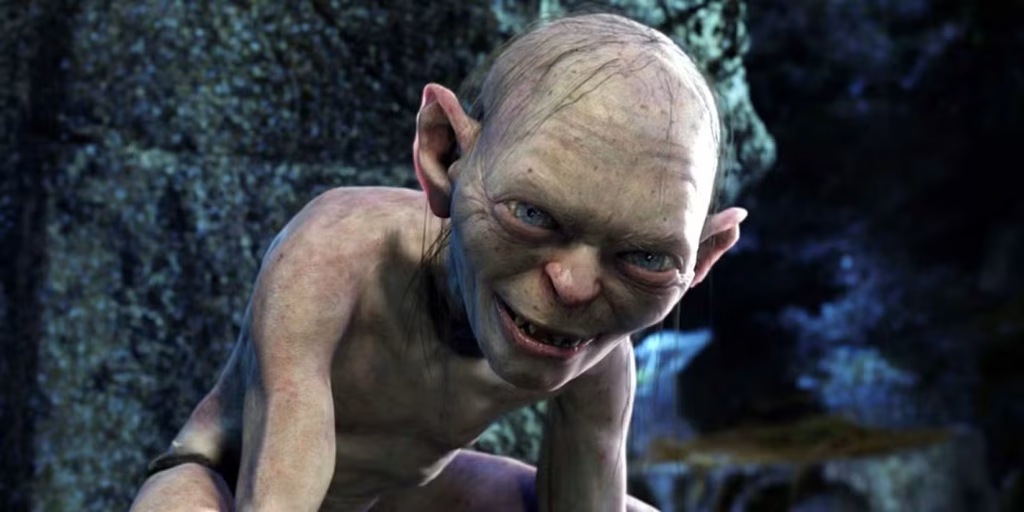
12. The Lord of the Rings: The Two Towers (2002)
Middle-earth truly found its digital soul with Gollum. Andy Serkis’ motion-capture performance brought depth, vulnerability, and menace to a fully CGI character in a way audiences had never seen before. He wasn’t just a visual effect; he was a tragic presence.
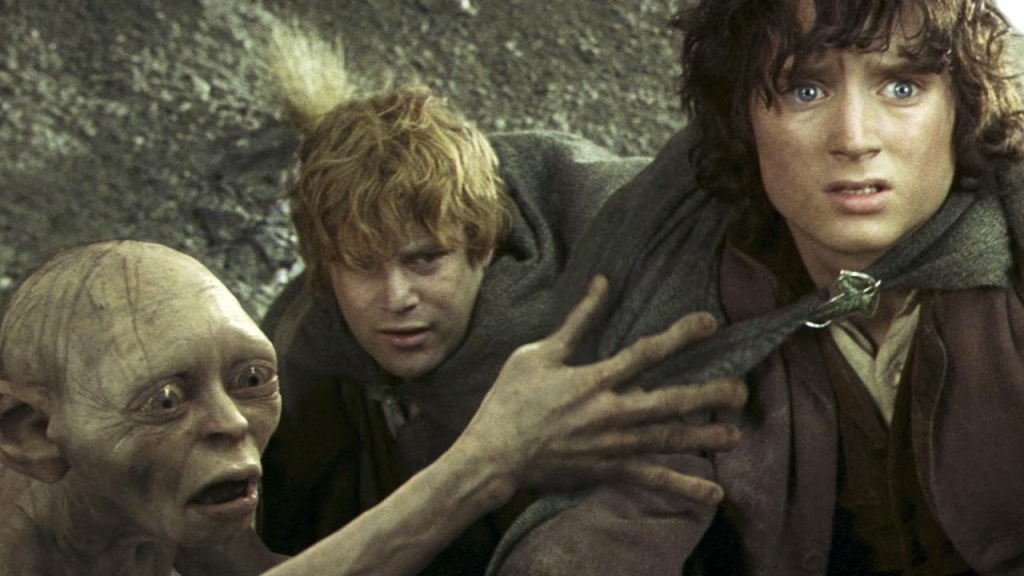
Beyond Gollum, the Battle of Helm’s Deep redefined large-scale warfare on screen. Weta Digital’s crowd simulation software allowed thousands of fighters to move independently, creating chaos that felt authentic. The Two Towers showed how technology could serve emotion, scale, and storytelling all at once.

11. The Matrix (1999)
Few films have left fingerprints on pop culture like The Matrix. Its most famous innovation, “bullet time,” froze action mid-movement while the camera seemed to glide impossibly around it. Achieved through precise still photography and virtual camera mapping, the effect instantly became iconic.

The Wachowskis also used color grading as storytelling, bathing the simulated world in sickly greens to subtly reinforce the idea of artificial reality. The Matrix didn’t just introduce new tricks; it changed how filmmakers thought about visuals as philosophy.

10. Jurassic Park (1993)
When dinosaurs first roared onto the screen in Jurassic Park, audiences genuinely wondered how filmmakers had done it. Steven Spielberg’s genius was knowing when to use animatronics and when to lean on CGI.
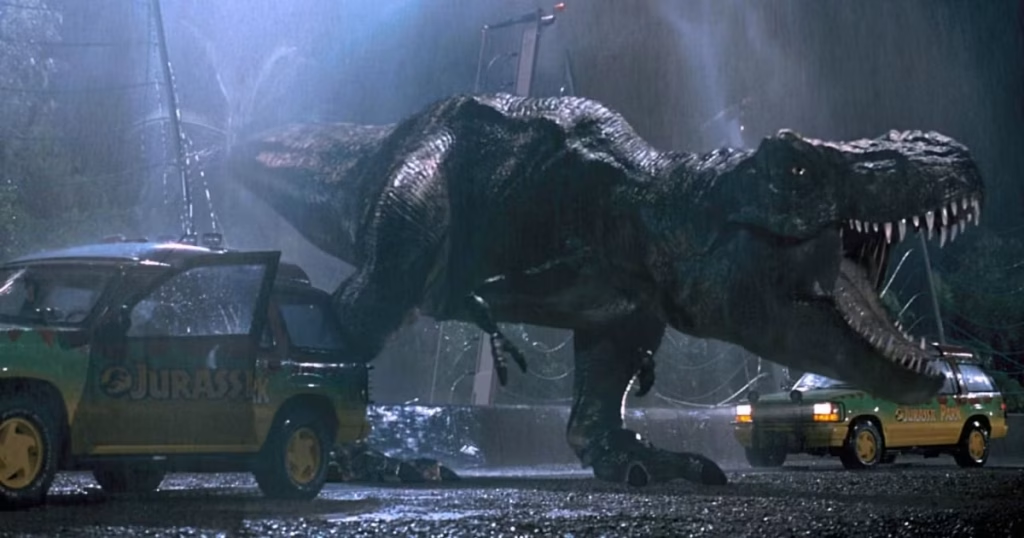
The physical dinosaurs gave weight and presence, while digital effects filled in motion and scale that mechanical models couldn’t achieve. This careful balance made the creatures feel alive. Nearly every modern creature feature traces its lineage back to this film.

9. Dead Alive (Braindead) (1992)
Long before epic battles and Oscar wins, Peter Jackson was gleefully drowning audiences in fake blood. Dead Alive is a low-budget splatter comedy that pushed practical gore to absurd extremes.

Using puppets, prosthetics, and outrageous quantities of stage blood, Jackson created unforgettable scenes of chaos, most famously a lawnmower massacre that remains legendary. The film proved imagination could outweigh budget, and it cemented Jackson as a fearless effects experimenter.

8. Terminator 2: Judgment Day (1991)
Terminator 2 arrived like a warning shot from the future. The liquid-metal T-1000 was unlike anything audiences had seen, morphing seamlessly between human and machine.

Industrial Light & Magic pushed early CGI to its limits, spending days rendering seconds of footage. Combined with practical stunts and explosive action, the effects still hold up decades later. T2 redefined what a blockbuster villain could look like and how real CGI could feel.

7. Who Framed Roger Rabbit? (1988)
Blending live action and animation had been attempted before, but never at this level. Who Framed Roger Rabbit? required obsessive precision, from camera movement to lighting, to sell the illusion that humans and cartoons shared the same space.

Bob Hoskins’ committed performance anchored the fantasy, while inventive tricks solved problems no one had faced before. The result remains one of the most convincing hybrid films ever made.

6. Tron (1982)
Tron was a gamble that paid off in influence, if not initially at the box office. At a time when computers were barely household items, the film dared to visualize life inside a digital world.

Using early CGI, backlit animation, and experimental compositing, the filmmakers worked with laughably small memory limits by today’s standards. The bold visual language they created laid the groundwork for how cinema imagines cyberspace even now.

5. The Thing (1982)
Rob Bottin’s work on The Thing remains the gold standard for practical horror effects. The film’s alien transformations are grotesque, shocking, and deeply unsettling because they’re real.

Using puppetry, animatronics, and mechanical effects, Bottin crafted scenes that feel unpredictable and alive. Decades later, they’re still studied, celebrated, and rarely matched.

4. An American Werewolf in London (1981)
Rick Baker’s transformation sequence didn’t cut away or hide in shadows; it lingered. Bones stretched, muscles shifted, and the horror unfolded in full view.
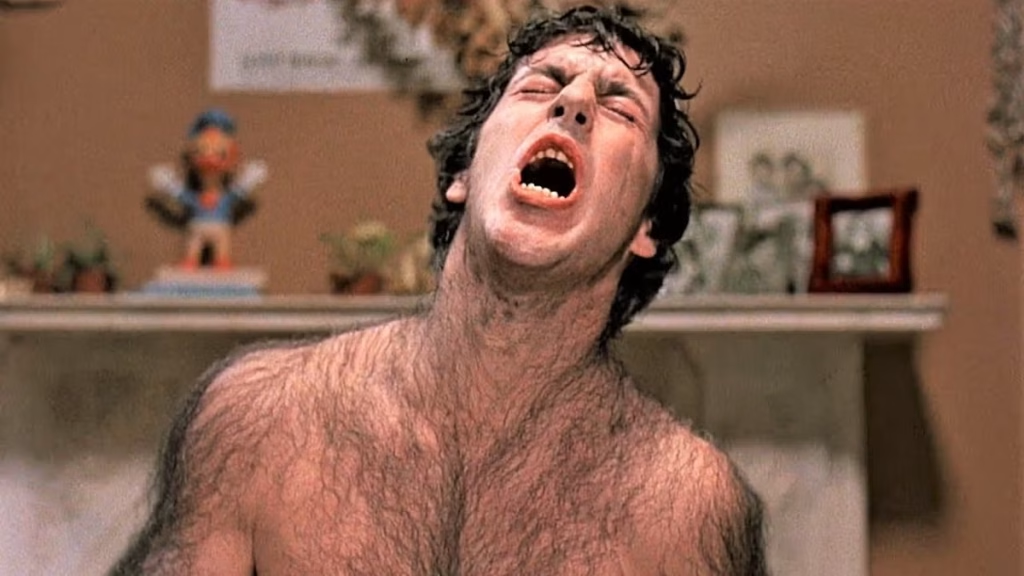
This commitment to realism earned Baker an Academy Award and permanently raised expectations for creature effects. The scene remains one of the most influential transformations in film history.

3. Alien (1979)
Alien didn’t rely on spectacle; it relied on atmosphere. H.R. Giger’s biomechanical creature design was deeply unsettling, and the film’s grimy, industrial sets made the future feel claustrophobic and hostile.

By keeping the alien partially hidden and grounding effects in physical reality, Ridley Scott created terror through suggestion. The film’s aesthetic still echoes through sci-fi and horror today.

2. Star Wars: A New Hope (1977)
Before Star Wars, science fiction looked clean and distant. George Lucas made it dirty, lived-in, and thrilling. Miniatures, matte paintings, and practical sets created a universe that felt real and expansive.

ILM’s groundbreaking work reshaped the industry overnight, and the opening Star Destroyer shot remains one of cinema’s most unforgettable images.

1. Jason and the Argonauts (1963)
At the top stands Ray Harryhausen’s masterpiece. Jason and the Argonauts showcased stop-motion animation at its absolute peak, especially during the legendary skeleton battle.

Harryhausen animated each frame by hand, perfectly matching movement, lighting, and choreography with live-action footage. The result is still magical, proof that patience, artistry, and imagination can outlast any technology.

From stop-motion skeletons to liquid-metal assassins, these films represent turning points where creativity and technology collided. While tools have evolved, the heart of great visual effects hasn’t changed: it’s about making audiences believe, even just for a moment, that the impossible is real.