


The Oscars like to think of themselves as the ultimate authority on cinematic greatness, but history tells a messier story. Time and again, performances and films that later proved influential, iconic, or culturally vital were ignored or outright rejected by the Academy. These omissions don’t just frustrate fans; they reveal patterns in how the Oscars reward safety, tradition, and industry politics over risk and innovation. Years later, these decisions still spark arguments, essays, and social media meltdowns. Here are fifteen Oscar snubs and controversies that continue to haunt awards season lore.

15. Amy Adams — Arrival
In Arrival, Amy Adams gave one of the most emotionally restrained performances of her career, portraying a linguist grappling with grief, time, and communication on a cosmic scale. Her work unfolds quietly, relying on body language, pauses, and subtle shifts rather than big emotional outbursts, making it all the more devastating.

Despite the film earning multiple nominations, Adams was left out of the Best Actress race entirely. The snub reinforced a long-standing Academy blind spot: performances that prioritize interior emotion over theatrical intensity often struggle to break through, even when they carry the entire film.

14. Audrey Tautou — Amélie
Audrey Tautou turned Amélie into a global phenomenon through charm, precision, and physical storytelling. Her performance communicated longing, kindness, and vulnerability with minimal dialogue, drawing audiences into Amélie’s inner world almost effortlessly.

Even with the film’s international success, Tautou failed to earn a Best Actress nomination. The omission highlighted the Academy’s persistent reluctance to fully embrace non-English performances, no matter how beloved or influential they become.

13. Toni Collette — Hereditary
Toni Collette’s performance in Hereditary is raw, fearless, and emotionally exhausting in the best possible way. She anchors the film’s supernatural horror in painfully real grief, delivering scenes so intense they border on unbearable.

Yet the Academy once again shut its doors to horror, ignoring both the film and Collette’s work. The snub has since become a rallying cry for fans who argue that horror performances are held to an unfairly different standard.

12. Jack Nicholson — The Shining
Jack Nicholson’s slide into madness in The Shining is one of the most iconic depictions of mental breakdown ever put on film. At the time, however, The Shining was seen as too much and too cold, and Nicholson’s performance was overlooked by the Academy.

Today, of course, The Shining is regarded as a classic, and Nicholson’s performance is a landmark. The Academy’s oversight is a testament to the fact that long-term significance is often invisible at the time.

11. Mia Farrow – Rosemary’s Baby
Mia Farrow’s performance in Rosemary’s Baby is a masterclass in horror acting, as she expertly conveys a sense of creeping madness in a way that is both chilling and terrifyingly intimate. The paranoia induced by the film sticks with the viewer long after the credits roll.

Although the film has had a huge influence on the horror genre, Farrow has never been nominated for an Oscar. This is a testament to the fact that performances in horror films are often overlooked in favor of more conventional acting roles.

10. Paul Giamatti — Sideways
Sideways was a critical darling, but Paul Giamatti’s absence from the Best Actor lineup was impossible to ignore. His portrayal of a bitter, insecure writer struck a nerve with audiences, capturing quiet desperation with remarkable specificity.

The Academy’s oversight suggested a bias against low-key, character-driven performances. Giamatti’s snub remains a textbook example of how intimate acting can be undervalued during awards season.

9. Robert Shaw — Jaws
While Jaws became a blockbuster phenomenon, its actors were shut out of Oscar consideration. Robert Shaw’s Quint, however, gave the film its soul, especially during the haunting USS Indianapolis monologue.

Shaw’s performance elevated Jaws beyond spectacle, grounding it in obsession and trauma. His absence from the acting categories highlights the Academy’s long-standing discomfort with genre-defining blockbusters.

8. James Stewart — Vertigo
James Stewart’s performance in Vertigo shattered his wholesome screen persona, revealing a darker, more obsessive edge. At the time, both the film and Stewart’s work were largely ignored.

Today, Vertigo routinely tops lists of the greatest films ever made. The Academy’s initial indifference serves as a reminder that innovation often takes decades to be fully appreciated.
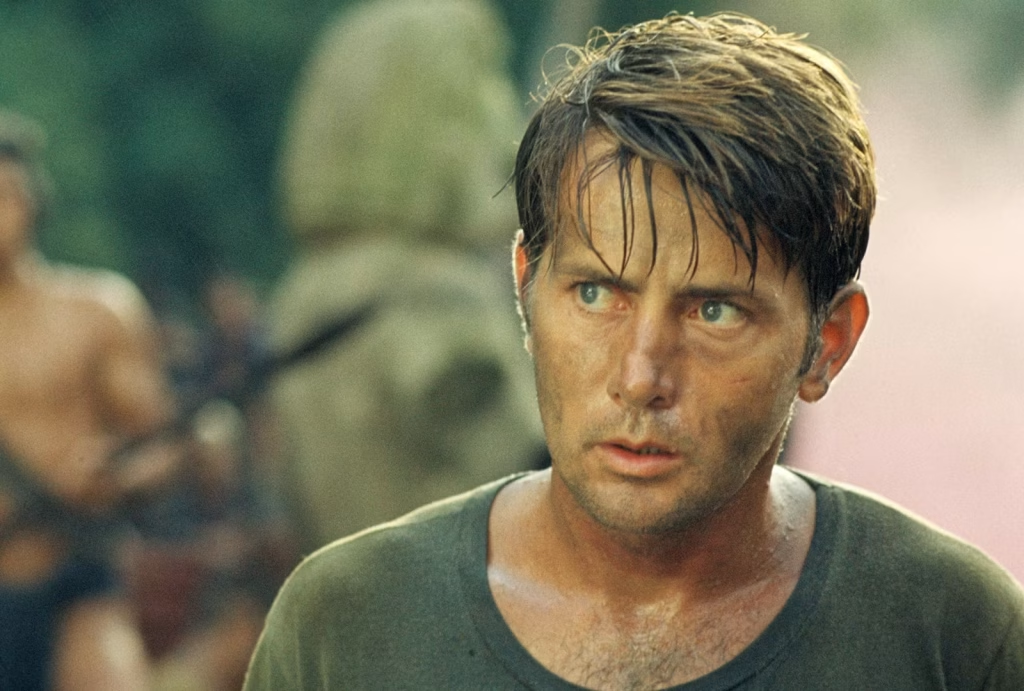
7. Martin Sheen — Apocalypse Now
Martin Sheen carried Apocalypse Now with a performance defined by exhaustion, paranoia, and moral disintegration. His Captain Willard feels unmoored from reality, mirroring the madness of war itself.

Despite the film’s acclaim, Sheen was left out of the awards conversation. The snub remains one of the most puzzling in Oscar history, especially given the role’s psychological depth.

6. Orson Welles and Citizen Kane
Citizen Kane is now synonymous with cinematic greatness, but it lost Best Picture upon release amid fierce industry backlash. Orson Welles’s clash with powerful figures made the film politically radioactive.

Though it won for screenplay, the loss remains symbolic of how industry politics can override artistic achievement. Few Oscar decisions have aged as poorly.

5. Alfred Hitchcock
Despite redefining suspense cinema, Alfred Hitchcock never won Best Director. Films like Psycho and Vertigo were seen as too unconventional or provocative for the Academy.
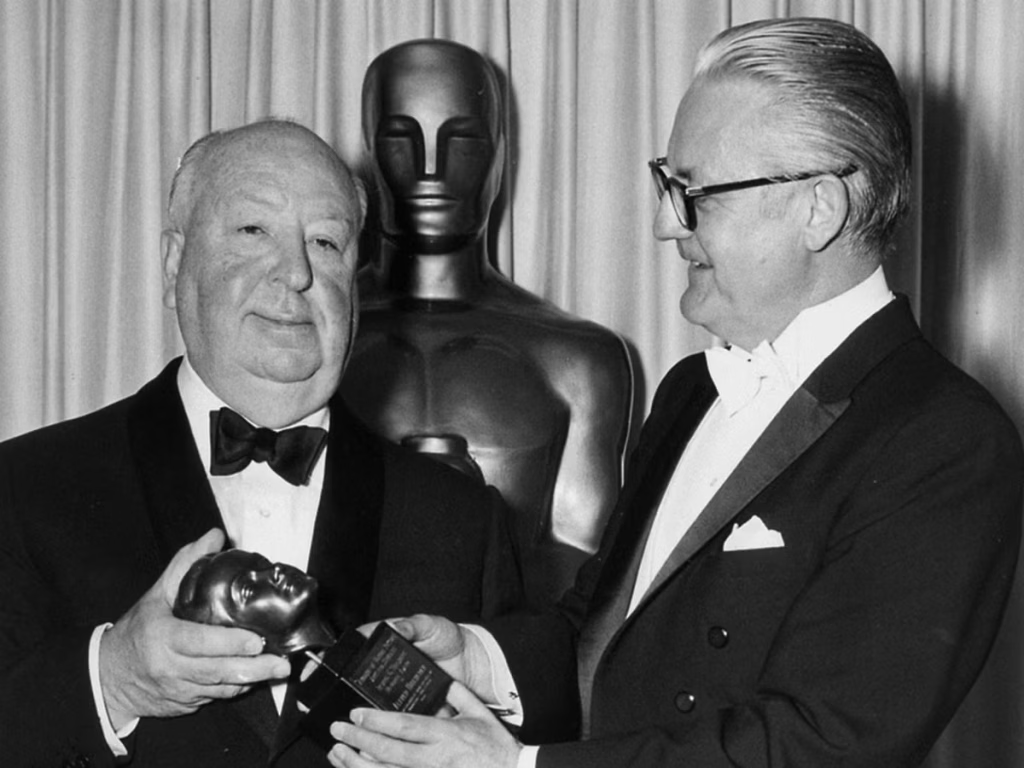
His eventual honorary award felt overdue and insufficient. Hitchcock’s snubs illustrate how the Oscars often struggle to reward innovation while it’s happening.

4. Stanley Kubrick
Stanley Kubrick’s films challenged audiences and institutions alike, and the Academy rarely knew what to do with them. Though frequently nominated, he won only once, and for visual effects.

Kubrick’s lack of recognition reflects the Academy’s preference for familiarity over experimentation. His legacy, however, has far outgrown his Oscar tally.

3. Spike Lee – Do the Right Thing
Spike Lee’s Do the Right Thing was overlooked in the Best Picture category, as it went on to lose to more conventional and less provocative films. The film’s treatment of race and its uncomfortable messages disturbed voters.

The film has come to represent the Academy’s conflict with more provocative forms of storytelling. Even to this day, the film’s omission seems like a lost chance at recognition.

2. Martin Scorsese
Martin Scorsese’s career is littered with near-misses. Landmark films like Taxi Driver and Goodfellas lost to more traditional choices, delaying his eventual win.

When The Departed finally earned him Oscars, it felt like retroactive acknowledgment. Scorsese’s journey highlights how the Academy often rewards longevity rather than peak achievement.

1. The Most Controversial Best Picture Upsets
Few Oscar moments sting more than the infamous Best Picture upsets. Shakespeare in Love defeating Saving Private Ryan signaled a shift toward aggressive campaigning over merit.

Later shocks Crash over Brokeback Mountain and Green Book over Roma reinforced how politics, bias, and timing can outweigh cultural impact. These wins remain some of the most debated decisions in Oscar history.

Oscar snubs aren’t just disappointments; they’re reflections of the Academy’s evolving values, blind spots, and internal politics. What’s overlooked today often becomes tomorrow’s masterpiece, reshaping how we judge artistic success. In the end, legacy matters more than trophies. And these films and performances, snubbed or not, have already won where it truly counts: cultural memory.