


Quite often, queer representation in animation was a quiet one, not a very loud and explicit one. At that time, it was generally subtext, coded characters, and a flash of the eyes in scenes if not very open characters. But creators didn’t say things straight, audiences still discovered meanings and even themselves in the characters on screen. They are the characters who moved animation along by being in confirmed relationships, deliberate ambiguity, or boldly defying the norms. Their presence together reveals the immense power of visibility even when it is quiet.

15. Frieza (Dragon Ball)
Frieza stands among anime’s most unforgettable villains, and part of that legacy comes from how completely the character breaks traditional expectations. With an elegant yet menacing presence, an androgynous design, and theatrical mannerisms, Frieza feels distinct even in a universe packed with exaggerated personalities.
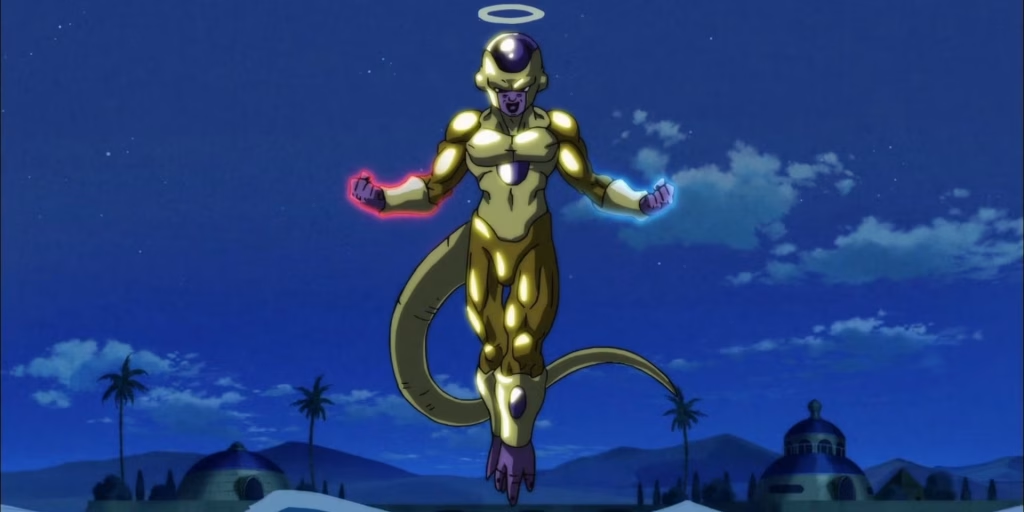
Although Dragon Ball never directly labels Frieza’s identity, the character’s presentation has fueled decades of fan discussion. That openness has allowed viewers to read deeper meaning into Frieza’s performance, turning a legendary antagonist into an unexpected point of connection for fans who value characters that exist outside rigid norms.

14. Mako Mankanshoku (Kill la Kill)
Mako Mankanshoku bursts onto the screen with chaotic energy and an unshakable bond with Ryuko. Her loyalty borders on devotion, and her emotional intensity often reads as something deeper than ordinary friendship, especially given how openly she expresses affection.

The show plays much of this for comedy, but fans have long embraced Mako as a character rich with subtext. Her sincerity, oddball charm, and refusal to tone herself down make her an enduring favorite—and a reminder that queerness in animation can be joyful, messy, and loud.

13. Grell Sutcliff (Black Butler)
Grell Sutcliff is impossible to ignore. With flamboyant flair, unapologetic confidence, and a clear preference for men, Grell challenges conventional gender presentation in a genre that rarely allowed it at the time.

While the series occasionally treats Grell as comic relief, her visibility remains important. She exists boldly and openly, inspiring fans who saw little reflection elsewhere in anime. Grell’s lasting appeal lies in her refusal to be subtle or apologetic.
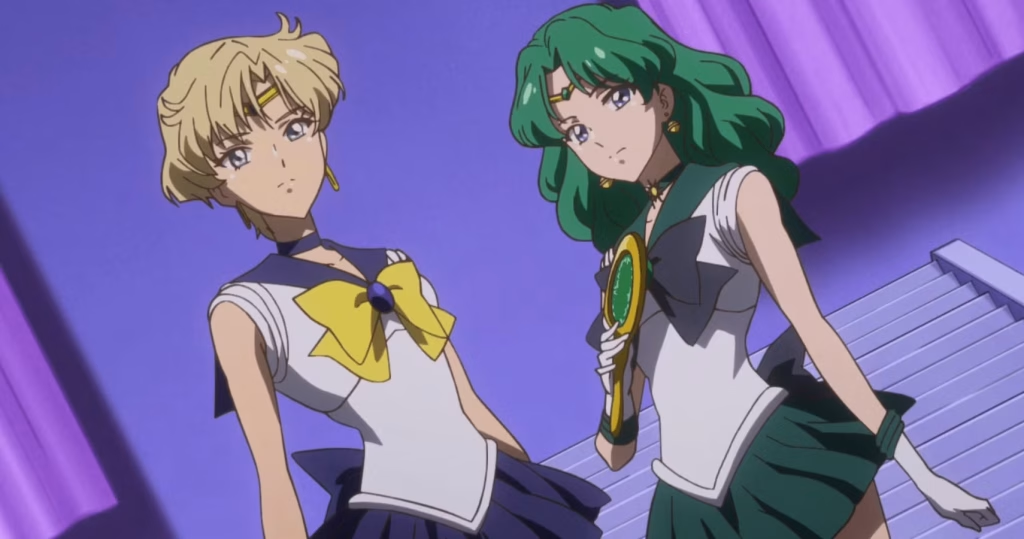
12. Sailor Neptune & Sailor Uranus (Sailor Moon)
Sailor Neptune and Sailor Uranus made history as one of anime’s earliest confirmed same-gender couples. Their connection is portrayed with elegance and mutual respect, framed as a partnership built on trust and shared purpose.
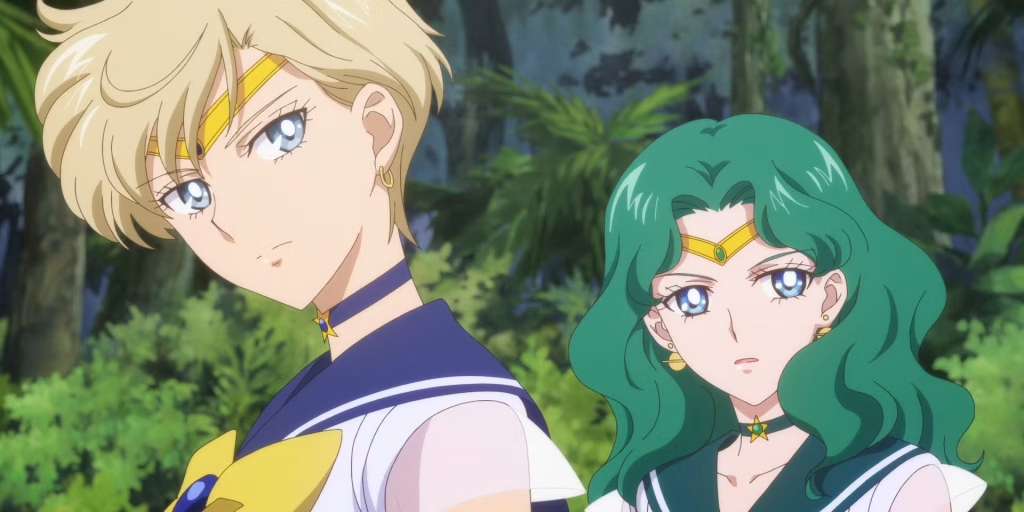
Despite censorship attempts in some international releases, their bond remained undeniable in the original series. Neptune and Uranus became symbols of courage, showing that love between women could be powerful, heroic, and central to the story.

11. Tomoyo Daidouji (Cardcaptor Sakura)
Tomoyo Daidouji’s feelings for Sakura are gentle, sincere, and deeply rooted in admiration. Her love is never exaggerated or mocked; instead, it’s portrayed as something tender and quietly heartbreaking.

For a show aimed at younger audiences, Tomoyo’s portrayal was remarkably thoughtful. Her presence offered comfort to viewers who recognized her emotions, proving that affection between girls could be shown with care and dignity.

10. Touya & Yukito (Cardcaptor Sakura)
Touya and Yukito’s relationship unfolds slowly, built on trust, sacrifice, and emotional intimacy. Their bond is never framed as shocking or controversial—it simply exists as part of the story.

What makes their inclusion so meaningful is how natural it feels. In a series filled with magic and destiny, their connection stands out as one of the most grounded and sincere relationships, offering quiet but powerful representation.

9. Hange Zoë (Attack on Titan)
Hange Zoë defies categorization, both in intellect and identity. The character’s gender is intentionally left undefined, a choice later affirmed by the creator as open to interpretation.

That ambiguity has allowed fans to embrace Hange as a symbol of freedom beyond labels. Brilliant, passionate, and unpredictable, Hange proves that representation doesn’t always require explanation—sometimes presence alone is enough.

8. Benson (Kipo and the Age of Wonderbeasts)
Benson’s story is refreshingly simple and deeply affirming. When he opens up about who he loves, the moment is treated with warmth and acceptance, free from drama or judgment.

His arc reflects how far animation has come. Benson’s confidence, kindness, and happiness show young viewers that being yourself doesn’t have to come with pain—it can simply be part of who you are.

7. Luz & Amity (The Owl House)
Luz and Amity’s relationship grows naturally, from awkward crushes to mutual support and love. Their journey feels honest, capturing the excitement and vulnerability of first romance.

What makes their story so impactful is its normalization. Their bond isn’t framed as different or risky—it’s just love. That quiet confidence has made them icons for a new generation.

6. Harley Quinn & Poison Ivy (Harley Quinn)
Harley and Ivy’s relationship evolves from friendship into something deeper, built on mutual growth and understanding. Their romance feels earned, shaped by shared experiences and emotional honesty.

The series allows them to be flawed, passionate, and supportive without reducing their connection to a gimmick. Their story proves adult animation can handle queer relationships with heart and complexity.
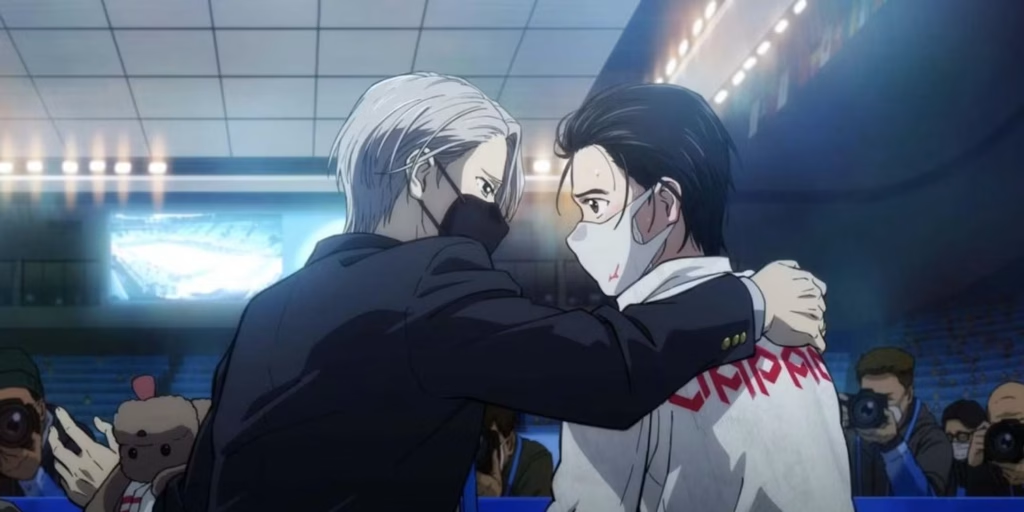
5. Yuri & Victor (Yuri!!! on Ice)
Yuri and Victor changed the landscape of sports anime by centering emotional intimacy alongside competition. Their bond grows through mentorship, trust, and admiration, eventually becoming unmistakably romantic.
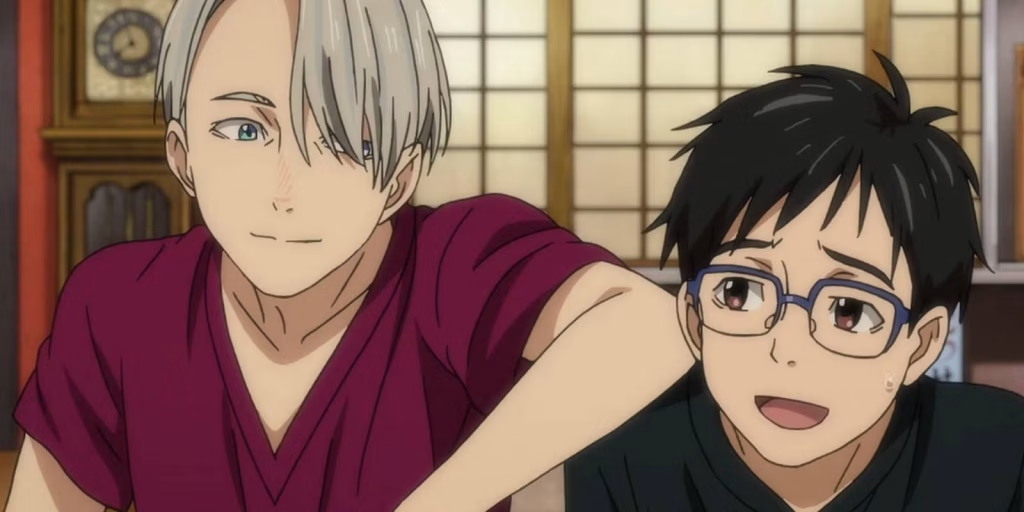
The series treats its connection with sincerity rather than spectacle. That choice resonated globally, showing that love stories between men could be tender, aspirational, and deeply human.
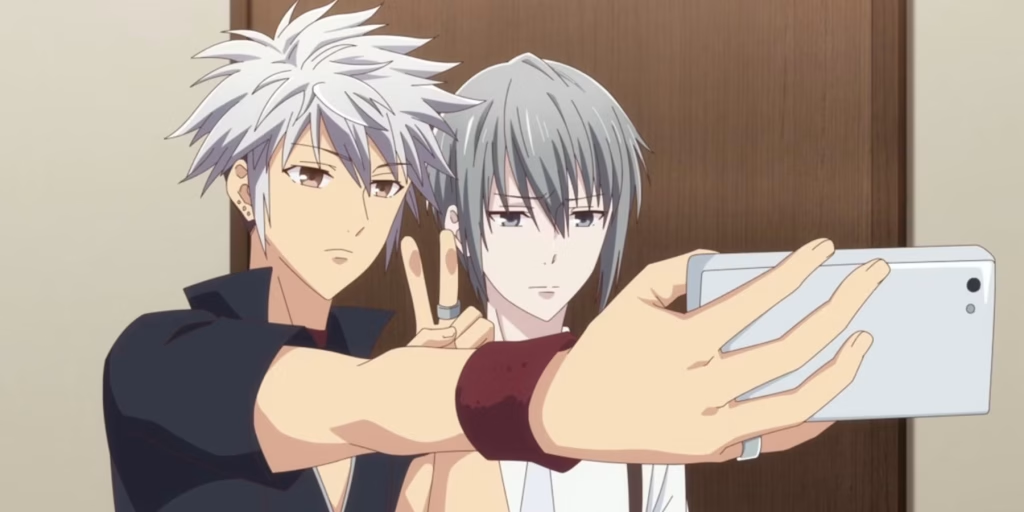
4. Hatsuharu (Fruits Basket)
Hatsuharu openly expresses attraction beyond a single gender, something rarely depicted so casually in anime. His feelings are never questioned or framed as confusion—they’re simply part of who he is.

This openness makes him stand out in a series that often hesitates around queerness. Hatsuharu’s confidence and emotional honesty remain refreshing, even when the story around him falls short.

3. Ritsu & Momiji (Fruits Basket)
Ritsu and Momiji both challenge gender expectations through clothing and self-expression. Their choices offer moments of visibility for viewers who find comfort in fluid presentation.

However, the series ultimately frames these traits as temporary, suggesting they must be left behind with adulthood. That framing has drawn criticism, turning their arcs into reminders of how representation can be limited by conformity.

2. Asami & Korra (The Legend of Korra)
Asami and Korra’s relationship marked a turning point for Western animation. Their connection develops subtly, rooted in trust, shared struggle, and emotional healing.
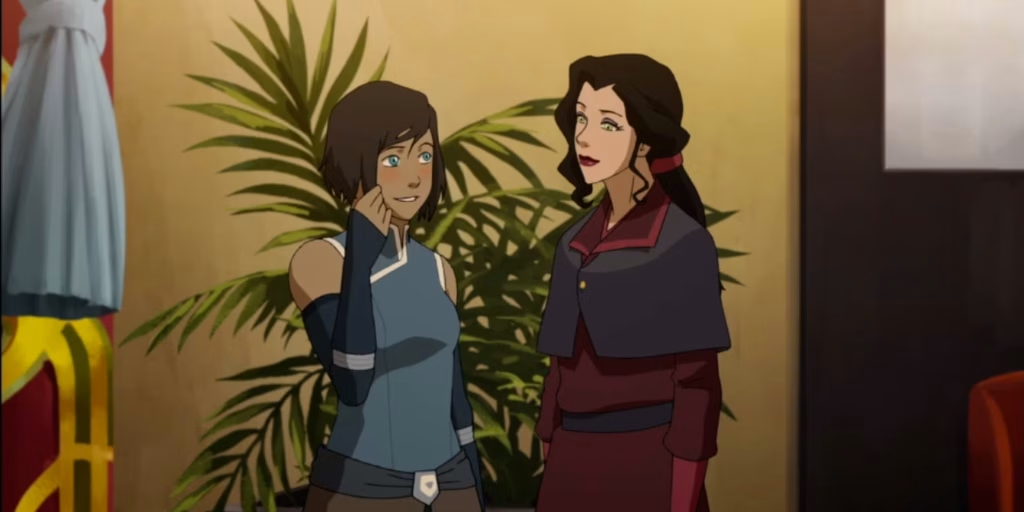
The finale’s confirmation of their bond resonated worldwide. It opened doors for future stories and proved that animated heroes could love beyond traditional pairings.

1. Saki & Arisa (Fruits Basket)
Saki and Arisa share a bond that feels charged with devotion and emotional intensity. Their connection, especially in flashbacks, mirrors romantic storytelling in everything but name.

Yet the series ultimately redirects them into conventional paths, leaving fans with a sense of lost potential. Their story highlights both the power of queer-coded relationships and the frustration of seeing them left unexplored.

Queer characters in animation have often existed between the lines, shaped by implication, courage, and audience interpretation. Even so, their influence has been profound, inspiring viewers to imagine broader possibilities. As animation continues to evolve, these characters remain milestones—proof that representation matters, even when it starts quietly.