


A debut film is a leap of faith. For some directors, that first step doesn’t just introduce a new voice; it shakes the entire industry. These filmmakers arrived with bold perspectives, limited resources, and something urgent to say. The following fifteen directorial debuts didn’t merely launch careers; they rewired what audiences and studios believed was possible.
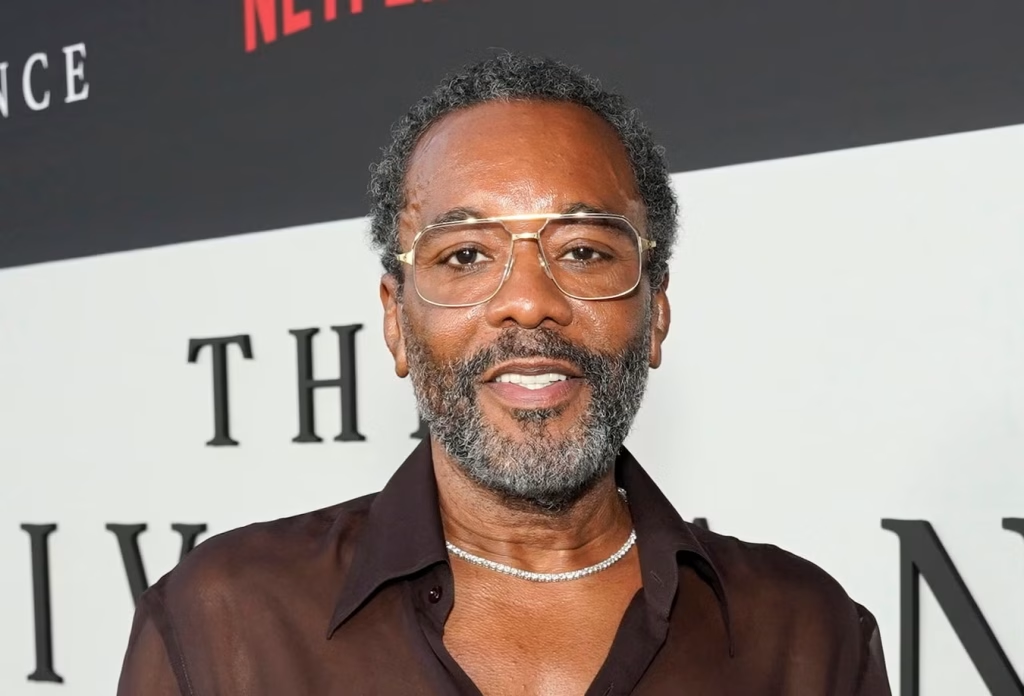
15. Lee Daniels — Precious
Lee Daniels announced himself with Precious, a fearless and emotionally bruising portrait of survival in modern Harlem. Drawing on his background as a producer, Daniels leaned into performance over polish, giving the film an immediacy that’s impossible to ignore.
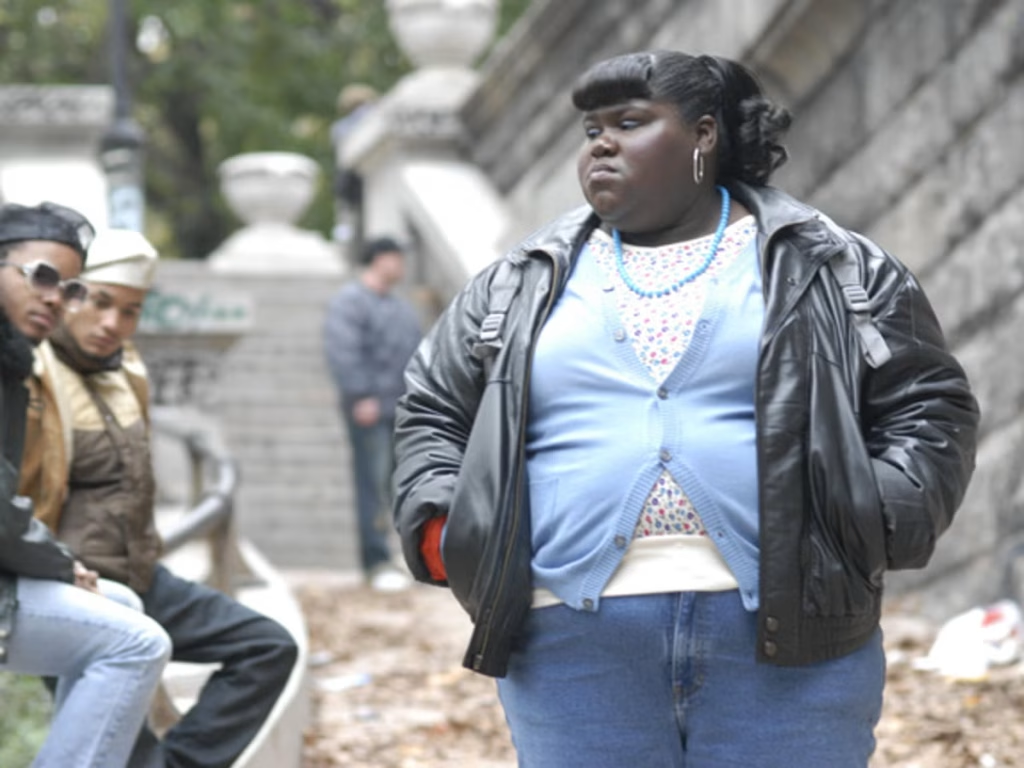
Powered by a breakout turn from Gabourey Sidibe and a devastating, Oscar-winning performance by Mo’Nique, the film confronted abuse, poverty, and self-worth without softening its edges. Its impact rippled beyond awards recognition, helping expand space in mainstream cinema for stories centered on marginalized voices.

14. Steve McQueen — 12 Years a Slave
Steve McQueen’s transition from visual artist to filmmaker arrived with astonishing authority. 12 Years a Slave rejected sentimentality in favor of restraint, letting long takes and silence communicate the brutality of American slavery.

Despite modest resources for a period epic, McQueen extracted staggering performances and crafted imagery that lingered long after the credits rolled. The film’s Best Picture win confirmed that confronting history head-on could resonate deeply with audiences worldwide.
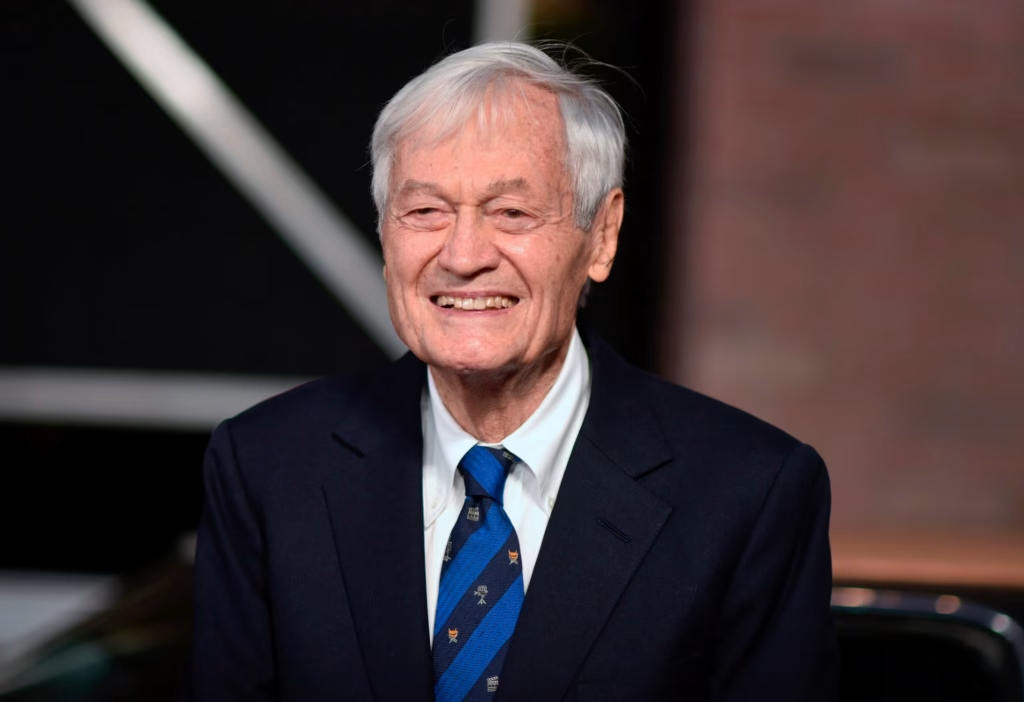
13. Roger Corman — Monster from the Ocean Floor
Roger Corman began exactly where he would continue: working fast, cheaply, and creatively. His debut creature feature may have been modest, but it showcased his uncanny ability to stretch resources to their limit.

More importantly, it launched a career dedicated to nurturing new talent. Corman became an unofficial film school, proving that discipline, efficiency, and imagination could build an empire without studio excess.

12. Julie Dash — Daughters of the Dust
Julie Dash’s debut was unlike anything American cinema had seen. Daughters of the Dust unfolded as a visual poem, chronicling the lives and traditions of the Gullah Geechee community with reverence and grace.

Shot independently and structured non-traditionally, the film challenged narrative norms and aesthetic expectations. Its influence has only grown over time, shaping the visual language of contemporary Black filmmakers and artists.

11. James Wan — Saw
James Wan turned constraint into an advantage. Shot quickly and cheaply, Saw relied on tension, pacing, and structure rather than spectacle. Its unsettling premise and sharp twist electrified audiences.

The film’s massive success redefined modern horror economics and launched a franchise juggernaut. Wan’s debut proved that clever design and strong storytelling can outperform big budgets every time.

10. Darren Aronofsky — Pi
Pi arrived like a fever dream. Darren Aronofsky’s stark, black-and-white debut plunged viewers into obsession, paranoia, and mathematical mysticism, all crafted on a shoestring budget.

The film’s experimental visuals and relentless intensity announced Aronofsky as a director unafraid of discomfort or ambiguity. It set the tone for a career built on emotional extremity and formal risk.

9. Richard Linklater — Slacker
Richard Linklater’s Slacker had no conventional plot, and that was the point. Meandering through conversations and chance encounters, the film captured a generation’s drifting anxieties with disarming honesty.

Its loose structure and low-budget ethos helped define 1990s indie cinema. Linklater proved that observation could be just as compelling as action.

8. Robert Rodriguez — El Mariachi
Few debut stories are as legendary as El Mariachi. Shot for the cost of a used car, Robert Rodriguez’s action film showcased relentless ingenuity, from creative camera tricks to guerrilla locations.

The film’s success shattered assumptions about what independent filmmakers could achieve. Rodriguez didn’t wait for permission; he made his own door and kicked it open.

7. Kevin Smith — Clerks
Kevin Smith’s Clerks felt like eavesdropping on real life. Filmed after hours in a convenience store, the movie thrived on sharp dialogue, awkward silences, and deeply relatable frustrations.

Its Sundance success transformed Smith into an indie icon and proved that voice mattered more than gloss. Sometimes, all you need is something honest to say.

6. The Coen Brothers — Blood Simple
With Blood Simple, the Coen brothers arrived fully formed. Their debut blended noir, dark comedy, and meticulous visual storytelling into something both familiar and strange.

The film’s precision and tonal confidence signaled the arrival of two filmmakers obsessed with structure and subversion. Their fingerprints would soon be everywhere.

5. Jordan Peele — Get Out
Jordan Peele’s pivot from comedy to horror caught many off guard, but Get Out landed like a thunderclap. Using genre as a Trojan horse, Peele dissected race, privilege, and performance in America.

The film’s cultural impact extended far beyond box office success, reshaping expectations for socially conscious genre cinema. Peele’s debut didn’t just scare, it challenged.

4. John Singleton — Boyz n the Hood
John Singleton was barely out of college when he made Boyz n the Hood, yet the film carried the weight of lived experience. His depiction of South Central Los Angeles balanced violence with tenderness and hope.

Singleton’s historic Oscar nomination marked a turning point, proving that authenticity could thrive in mainstream cinema without compromise.

3. Ava DuVernay — Selma
Ava DuVernay brought urgency and humanity to Selma, focusing not just on history but on the people living it. Her direction emphasized emotion, struggle, and moral courage.

The film affirmed DuVernay as a powerful voice in American cinema and opened doors for future filmmakers to blend activism with artistry.

2. Spike Lee — She’s Gotta Have It
Spike Lee burst onto the scene with swagger, humor, and defiance. She’s Gotta Have It was raw, stylish, and unapologetically Black, reshaping how stories about urban life were told.

Lee’s debut wasn’t just a calling card; it was a declaration of independence from cinematic convention.

1. Orson Welles — Citizen Kane
Few debuts come close to Citizen Kane. At 25, Orson Welles rewrote the grammar of cinema, experimenting with structure, perspective, and visual depth in ways that still feel modern.

The film’s innovations reshaped storytelling itself. Decades later, it remains a benchmark for ambition and artistic fearlessness.

These debut films remind us that revolution often starts small—with a first idea, a borrowed camera, or a story that refuses to stay quiet. Whether made for thousands or millions, each of these works reshaped cinema by daring to be different from the very beginning.