


Blumhouse has carved a unique niche in horror cinema, turning low-budget ingenuity into some of the most memorable, talked-about films in recent decades. Whether it’s chilling psychological terror, social commentary wrapped in genre thrills, or pure, adrenaline-pumping scares, Blumhouse knows how to make audiences scream—and think—at the same time.

From quiet, unsettling dread to blockbuster spectacle, their films are often as clever as they are frightening. Here’s a reverse-order countdown of the 15 Blumhouse horror movies that have left the biggest mark on audiences and the genre itself, whether through innovation, cultural impact, or sheer memorability.

15. Soft & Quiet
Beth de Araújo’s Soft & Quiet is a tense, real-time thriller that’s as uncomfortable as it is masterful. The film follows a small gathering of white supremacist women that spirals into escalating violence, all captured in a single, continuous take. The minimalism of the production—focused on real-time events and personal interactions—creates an intimacy that makes the violence feel disturbingly immediate. It’s a film that forces viewers to sit with their unease rather than offering easy catharsis.
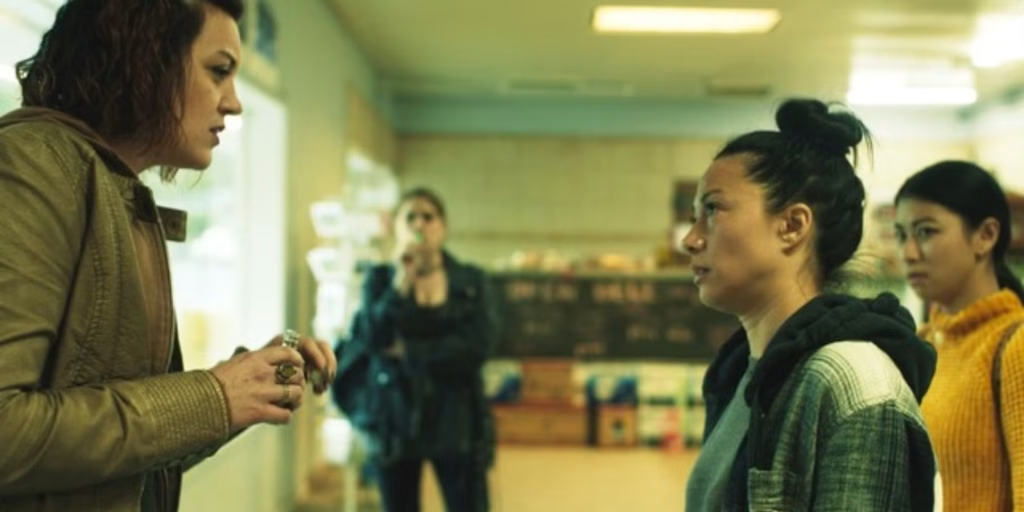
More than just a story about literal horror, the movie engages with cultural and social fears, exploring how ideology can manifest in everyday settings and turn mundane interactions terrifying. Its impact lies in its unflinching commitment to realism and tension, proving that horror doesn’t always need monsters—it can come from human cruelty and groupthink.

14. Creep 2
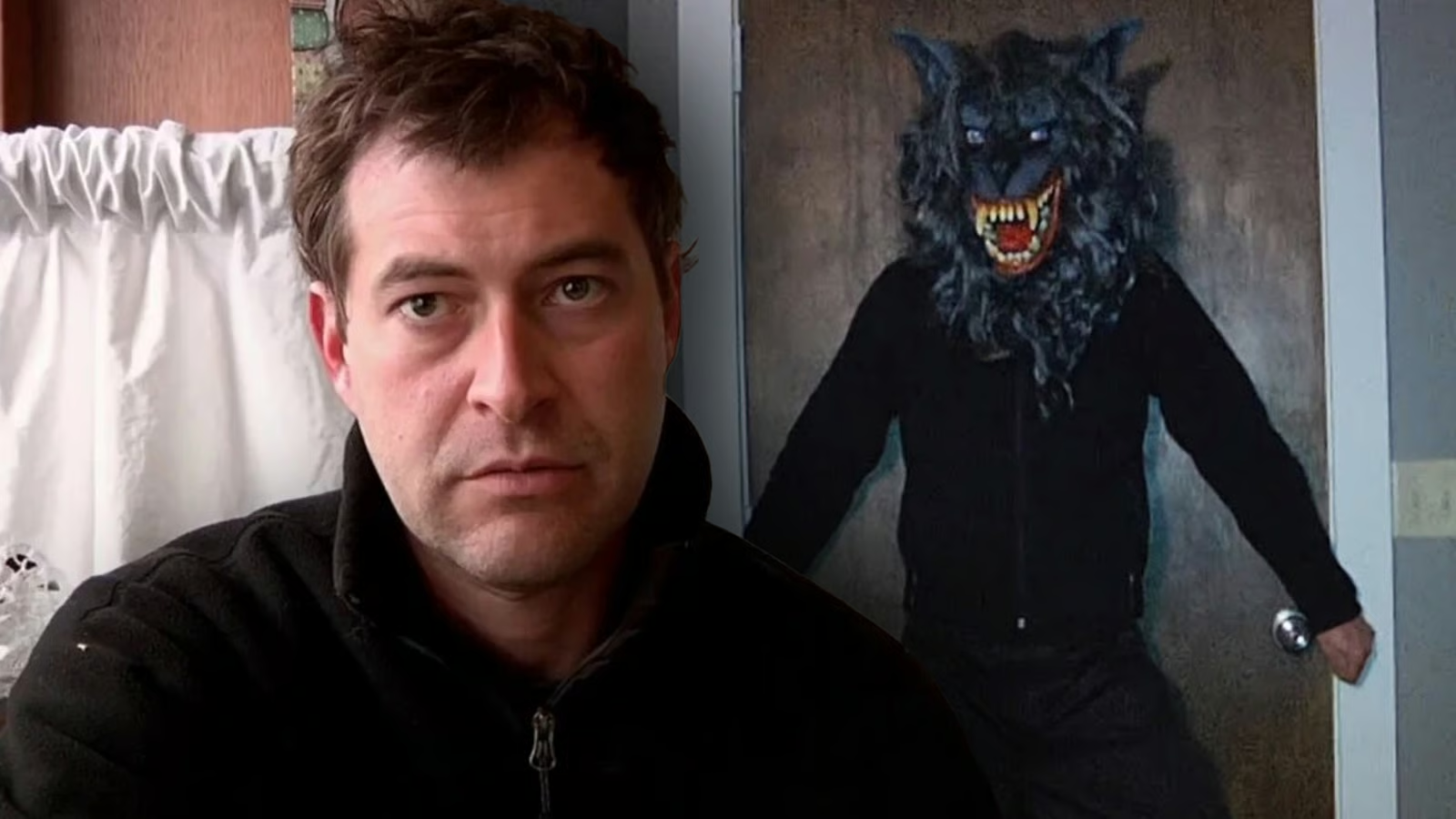
Mark Duplass returns in Creep 2 as the socially awkward, deeply unsettling serial killer from the first film, and this time his character wrestles with existential ennui and loneliness. The sequel expands the psychological tension, pairing Duplass’s charm and creepiness with Desiree Akhavan’s equally fearless presence. Their interaction builds suspense that’s as much about uncomfortable social dynamics as it is about danger.

The brilliance of the film lies in its exploration of loneliness, obsession, and human connection in the context of horror. With long takes and restrained pacing, the tension grows organically, making each moment feel like a slow, escalating nightmare. It’s proof that horror can thrive in the quiet spaces between words, and that a truly compelling villain can be just a human being with disturbingly relatable desires.
13. Creep
The original Creep introduced audiences to the found-footage horror format executed with meticulous precision. Patrick Brice’s character unknowingly invites himself into the home of Duplass’s unsettling Craigslist client, and what follows is a study in unease. The low-budget aesthetic enhances the realism, making every awkward interaction, misplaced gesture, and long, silent moment feel laden with dread.

It’s a film that thrives on psychological tension rather than gore, and its slow-burning pacing allows the audience to feel the protagonist’s growing discomfort. The intimacy of the camera makes viewers complicit in the situation, a technique that set Creep apart from many other horror films of its time and cemented its place as a standout Blumhouse entry.

12. Nanny
Anna Diop shines in Nanny, a film that blends psychological horror with elements of West African folklore. The story follows a woman navigating displacement, cultural isolation, and the emotional toll of caregiving, while supernatural forces loom subtly in the background. Nikyatu Jusu balances the real-world anxieties of the protagonist with eerie, otherworldly events, creating a story that is both grounded and terrifyingly surreal.
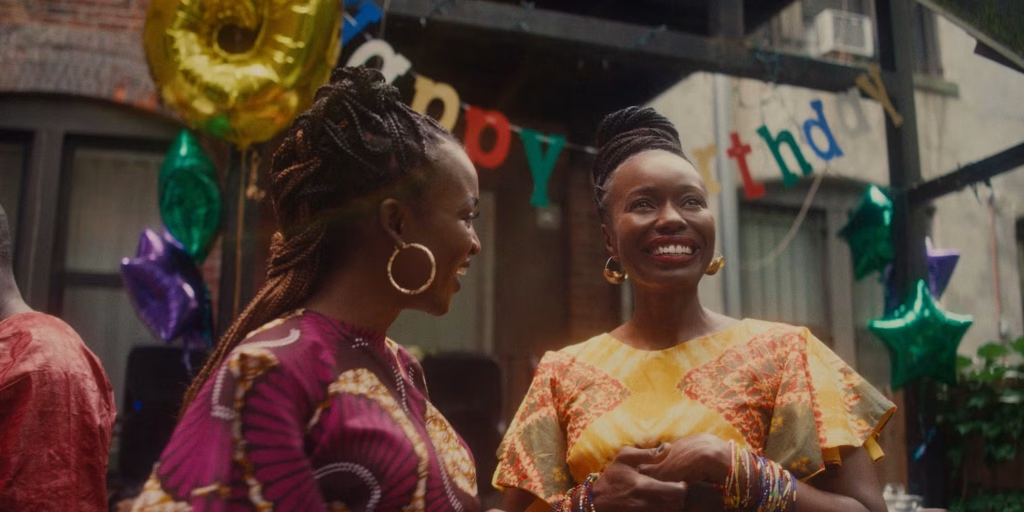
What makes the movie particularly impactful is its focus on personal and cultural stakes. The horror is deeply human at its core, exploring the cost of migration, motherhood, and identity, and wrapping these themes in a suspenseful narrative that lingers long after the credits roll. It proves that horror can be both socially resonant and deeply unsettling.

11. M3GAN
Move over, classic killer dolls—M3GAN is here. Blumhouse, alongside James Wan and Jason Blum, delivers a film that’s equal parts campy fun and social commentary. M3GAN, a hyper-intelligent robotic companion, becomes a meme-worthy sensation thanks to her deadly antics, but the film cleverly explores issues of modern parenting, screen addiction, and our reliance on technology for companionship and emotional support.

The movie thrives because it balances laughs, suspense, and horror in a way that appeals to a broad audience. The choreography, especially the viral dance scene, shows that Blumhouse understands how to merge spectacle with storytelling. M3GAN isn’t just a killer doll—it’s a reflection of our contemporary anxieties in an accessible, entertaining package.

10. The Invisible Man
Leigh Whannell’s The Invisible Man reinvents a classic horror icon with a contemporary lens, turning the story into a tense psychological thriller about control, abuse, and gaslighting. Elisabeth Moss delivers a career-best performance, embodying a woman navigating fear and trauma while being hunted by someone who appears untouchable. The tension in every scene is palpable, making the audience feel every moment of paranoia and dread alongside her.

The brilliance of the film lies in its use of absence as a threat—the unseen becomes more terrifying than anything visible, turning ordinary spaces into arenas of terror. By blending social commentary with traditional horror tropes, The Invisible Man shows that suspense and psychological depth can elevate genre storytelling to something profoundly affecting.

9. Cam
Cam tackles horror in the digital age, exploring identity, obsession, and online duplicity. Madeline Brewer plays a camgirl whose life is upended when a perfect digital version of herself begins taking over her online presence. The story is both unnerving and topical, highlighting the eerie vulnerabilities inherent in a world dominated by screens, social media, and performative intimacy.

Beyond the technological thrills, the film is a tense psychological character study. Brewer’s layered performance conveys panic, ingenuity, and isolation, while the horror emerges naturally from a familiar, seemingly safe environment turned threatening. It’s a modern story of selfhood, performance, and the uncanny power of digital doubles.

8. Sweetheart
J.D. Dillard’s Sweetheart brings survival horror to an isolated tropical setting, where Kiersey Clemons must outwit a terrifying sea creature after being stranded. The film fuses elements of classic monster movies with a contemporary psychological sensibility, emphasizing tension, resourcefulness, and human vulnerability. Every night, the protagonist faces fear amplified by isolation, fatigue, and environmental hazards.
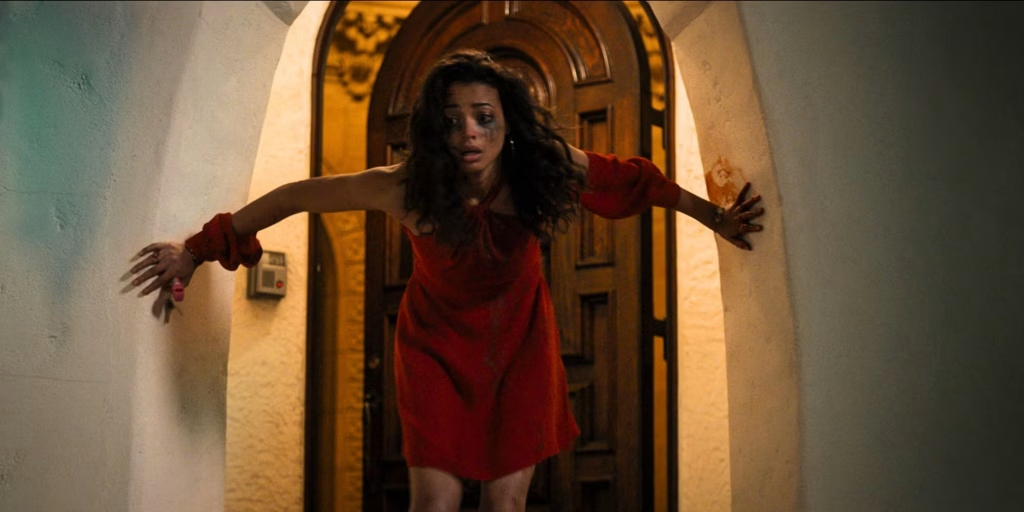
The story’s power comes from its combination of minimalist storytelling and primal fear. Dillard uses natural settings, sound design, and Clemons’s anchored performance to create a claustrophobic, high-stakes scenario. Sweetheart reminds audiences that isolation itself can be a form of horror, even before the monsters appear.

7. The Vigil
Keith Thomas’s The Vigil merges supernatural horror with deep cultural context, following a man tasked with watching over a deceased body overnight, only to confront malevolent forces. The movie’s strength lies in its blend of folklore, ritual, and psychological tension, providing fresh material within the familiar haunted-house framework.

Dave Davis anchors the film with a performance that balances fear, disbelief, and moral responsibility, making viewers feel the weight of his nightly vigil. The supernatural elements are both terrifying and thematically resonant, exploring grief, guilt, and spiritual reckoning. The Vigil is proof that cultural specificity can enrich horror without sacrificing universal scares.
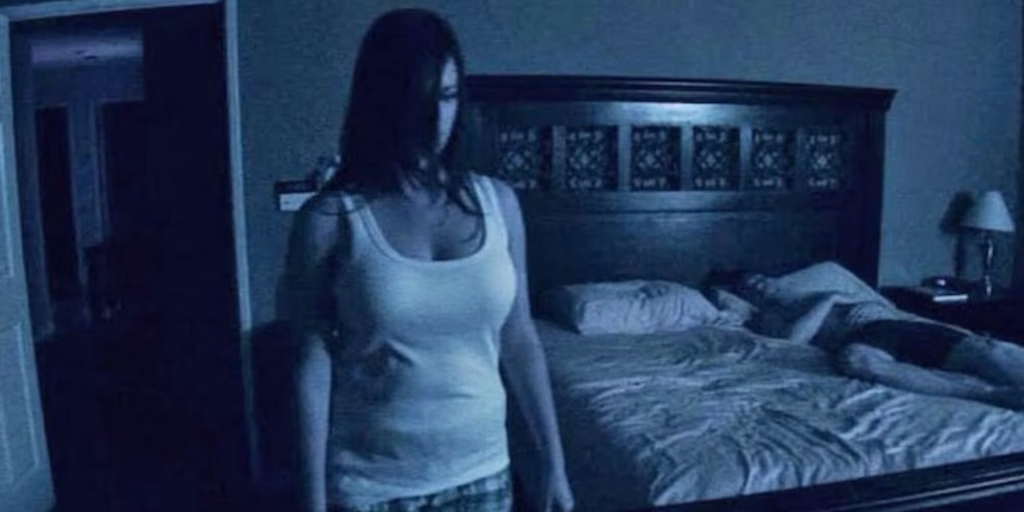
6. Paranormal Activity
Oren Peli’s Paranormal Activity transformed low-budget filmmaking into a horror powerhouse. The minimalist found-footage approach relied on subtle, creeping dread rather than blood or shock value, making every flicker, whisper, and shadow terrifying. The film became a cultural phenomenon, demonstrating that atmosphere and suspense could outweigh spectacle.
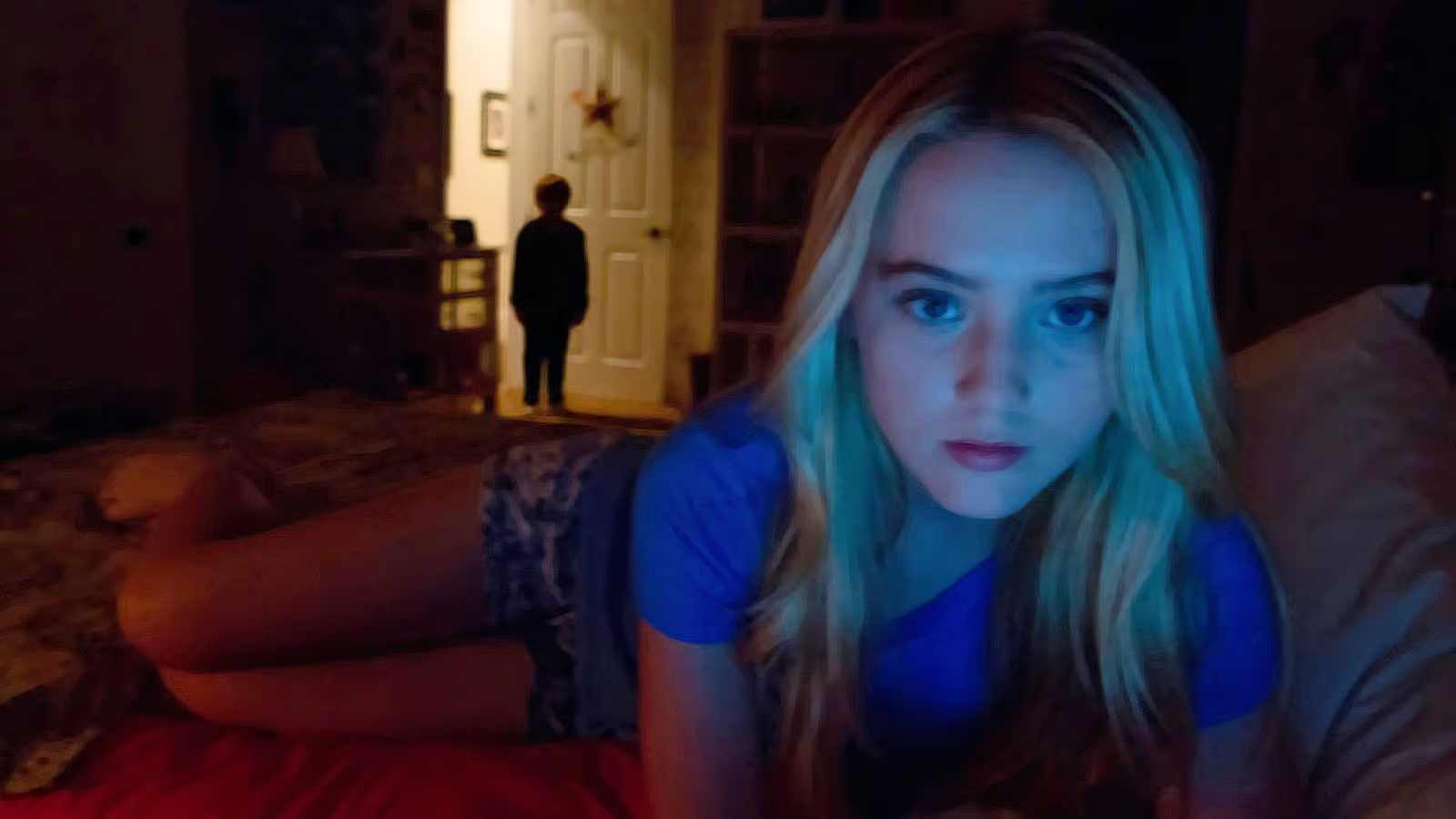
Its legacy is undeniable: it spawned numerous sequels, inspired imitators, and turned ordinary household spaces into vessels of fear. Watching the seemingly mundane become sinister reminds audiences that horror doesn’t require grandiose monsters—sometimes, tension is enough to keep viewers up all night.

5. Hush
Mike Flanagan’s Hush delivers a masterclass in tension, placing a deaf and mute protagonist at the center of a home-invasion scenario. Kate Siegel’s performance makes the audience acutely aware of the character’s vulnerability while also showcasing her resourcefulness. Every noise, shadow, and movement becomes heightened, turning the familiar home into a suspenseful maze.

By removing spoken dialogue, the film intensifies viewer immersion, relying on visual storytelling, sound design, and physical performance to convey terror. Hush demonstrates that horror can be both innovative and emotionally gripping without relying on overt gore or exposition.
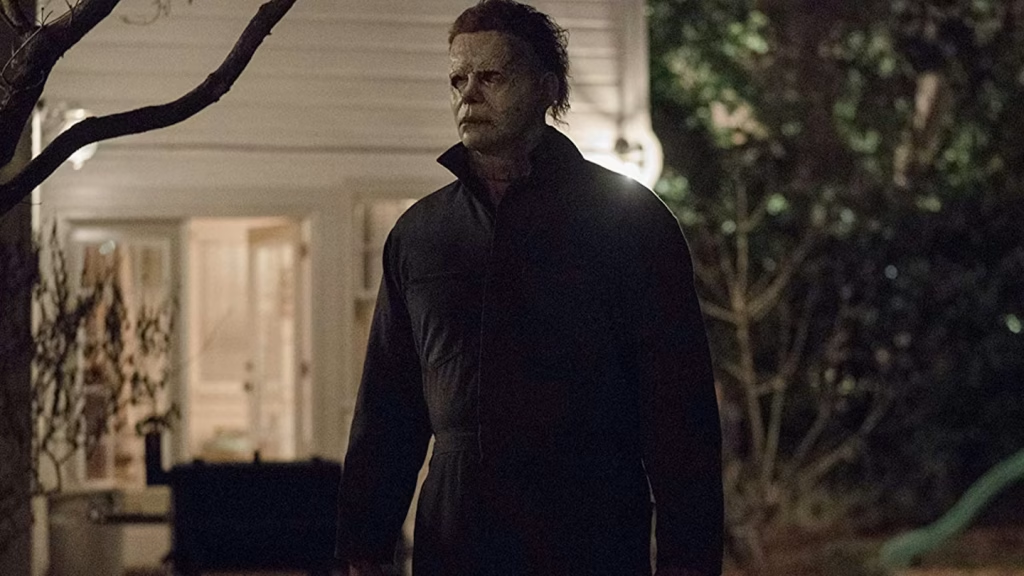
4. Halloween (2018)
David Gordon Green’s Halloween revitalizes the iconic franchise with a back-to-basics approach, bringing Jamie Lee Curtis back as Laurie Strode. The film strips away decades of convoluted sequels to focus on primal fear, survival, and the unstoppable menace of Michael Myers. Carpenter’s involvement in the score and tone ensures that this reboot feels respectful yet thrillingly contemporary.
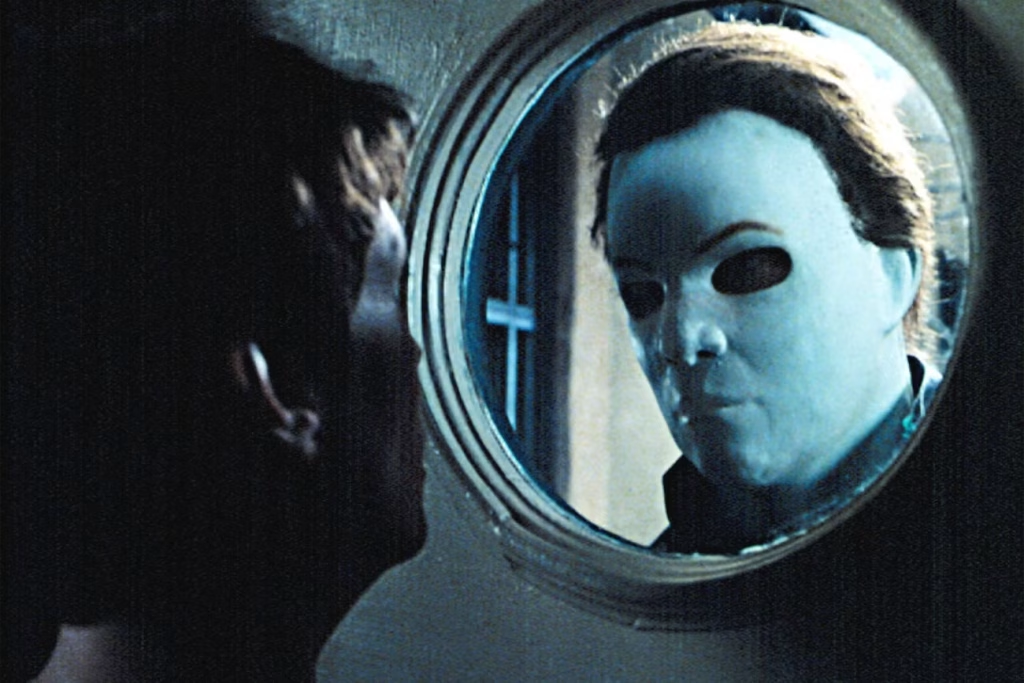
The movie succeeds because it balances nostalgia with tension, giving longtime fans the scares they expect while introducing suspenseful pacing and character-driven stakes. It’s a masterclass in legacy franchise filmmaking that respects the past while asserting its own relevance.

3. Us
Jordan Peele’s Us expands his exploration of horror and social commentary, following a family confronted by terrifying doppelgängers. Lupita Nyong’o’s dual performance is extraordinary, anchoring a film that examines identity, privilege, and the darkness lurking within society itself. Peele’s visual storytelling and careful attention to symbolism make the narrative rich with interpretive depth.

The horror in Us is as much psychological as it is visceral. Scenes of tension, dread, and the uncanny interplay between characters elevate it beyond simple jump scares. It’s a thought-provoking horror experience that rewards repeated viewing and analysis, cementing Peele’s place as one of modern horror’s most ambitious directors.

2. Get Out
Get Out is a watershed moment in horror cinema. Jordan Peele’s debut blends sharp social commentary with suspenseful storytelling, exploring racism and exploitation through the lens of a home-invasion horror scenario. Daniel Kaluuya’s performance conveys a mix of fear, intelligence, and resilience, guiding viewers through a tense narrative filled with both subtle and overt threats.
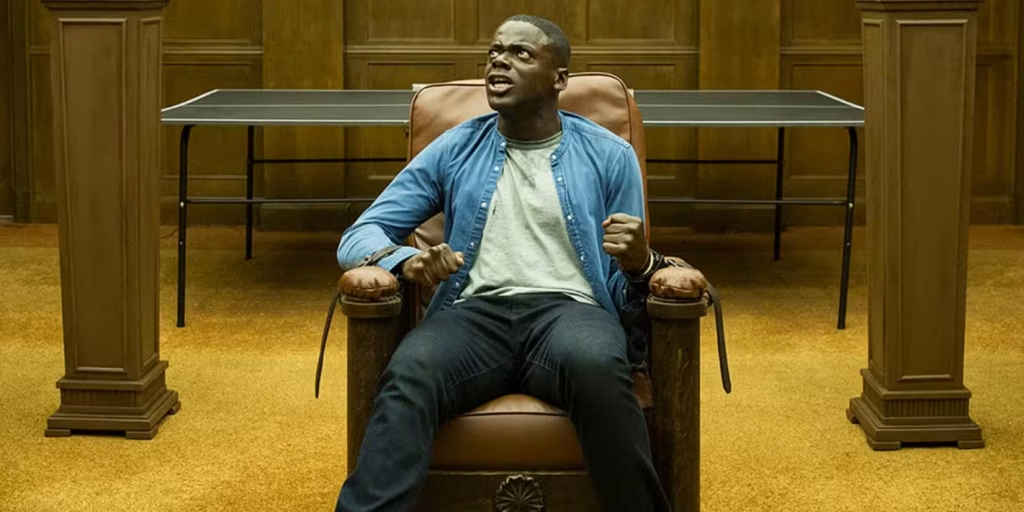
The film’s impact extends beyond horror, influencing discussions around race, genre, and narrative innovation. By combining satire, suspense, and deeply felt characterization, Get Out became a cultural touchstone, proving that genre films can carry both entertainment value and profound societal critique.

1. Nope
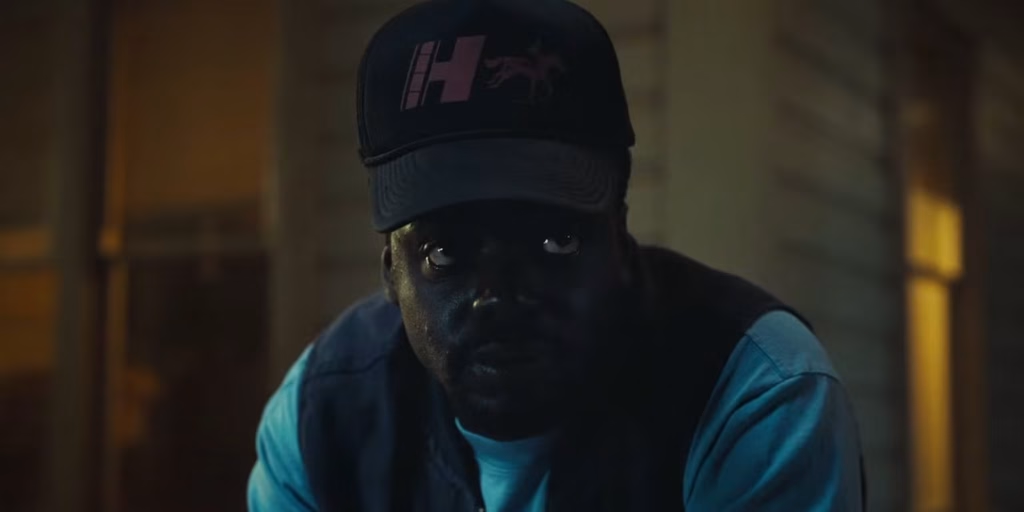
Jordan Peele’s Nope pushes genre boundaries, delivering a UFO-centered spectacle with wide-open cinematic landscapes. Keke Palmer and Daniel Kaluuya lead the cast with compelling performances that balance tension, awe, and human vulnerability. Peele’s command of pacing, framing, and suspense transforms what could have been a conventional thriller into a visually stunning and emotionally resonant experience.

The film’s impact lies in its blending of spectacle and social commentary, reflecting on humanity’s obsession with spectacle, exploitation, and survival instincts. With jaw-dropping visuals, unforgettable set pieces, and moments of pure tension, Nope solidifies Peele’s status as one of the most innovative voices in contemporary horror.

Blumhouse has redefined what modern horror can be, blending psychological depth, social relevance, and inventive scares in ways few studios can replicate. From intimate, character-driven nightmares to big-budget thrillers that command IMAX screens, these 15 films showcase the studio’s versatility and lasting influence.
Whether you’re here for the tension, the cultural commentary, or the sheer audacity of killer dolls and invisible threats, Blumhouse continues to prove that horror can be smart, impactful, and undeniably entertaining—one terrifying story at a time.