


Entertainment, art, and activism have been profoundly shaped by Black LGBTQ+ visionaries. These creators, performers, and activists have fought for visibility, rewritten cultural norms, and inspired generations to embrace their full selves. From the Harlem Renaissance to today’s streaming platforms, their contributions ripple across music, film, literature, and social justice. These 15 trailblazers have not only broken barriers, but they’ve created space where there was none. Their work reminds us that culture is made richer when marginalized voices are empowered, and that progress often comes from those daring to live authentically in the face of adversity. Let’s honor them, counting down from 15 to 1.

15. Willow Smith
Willow Smith is a multitalented musician, actor, and advocate whose artistry defies categorization. Known for hits like “Whip My Hair” and “Meet Me at Our Spot,” she has become a Gen Z icon for self-expression, exploring polyamory, queer identity, and fluidity in her work and public life.

Willow’s influence extends beyond music. She uses her platform to spark conversations about love, identity, and mental health, creating space for young queer audiences to see themselves reflected in art. Her career embodies courage, creativity, and authenticity.
14. Sasha Lane
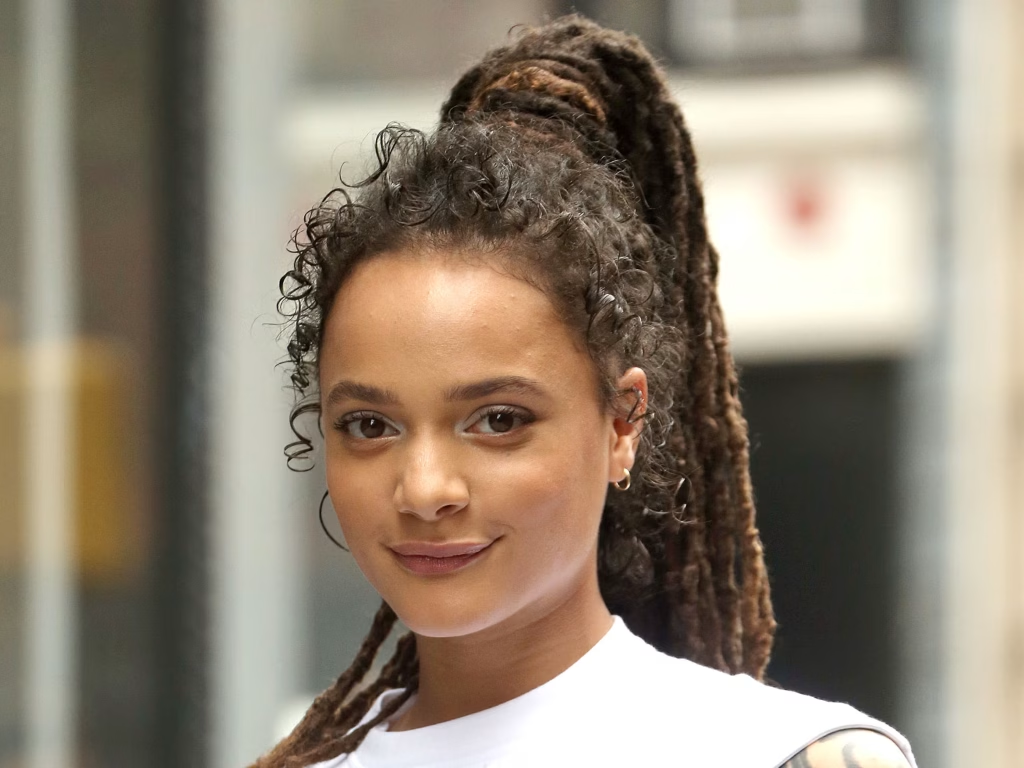
Sasha Lane quickly emerged as a standout talent with her debut in American Honey. She has since carved a niche in queer cinema, starring in films like Hearts Beat Loud and The Miseducation of Cameron Post, bringing authentic queer representation to the screen.

Lane’s openness about her identity and commitment to choosing meaningful roles make her an inspiring figure for Black queer women in Hollywood. She demonstrates that visibility and authenticity can coexist with artistic excellence.

13. Kiersey Clemons
Kiersey Clemons gained recognition with Dope and has since taken on a variety of indie and mainstream roles. Her candidness about her queer identity, along with her performances in uplifting stories, has made her a role model for queer youth.

Clemons’ growing presence in Hollywood reflects the power of representation. By living openly and embracing diverse roles, she is helping redefine what it means to be a Black queer woman on screen.

12. Tessa Thompson
Tessa Thompson is a trailblazing actor known for Creed, Men in Black: International, and as Valkyrie, the MCU’s first openly LGBTQ+ superhero. She consistently champions intersectional representation, speaking openly about her Afro-Latina heritage and queerness.

Thompson’s roles and advocacy create visibility where it’s long overdue. Her career proves that mainstream blockbusters can both entertain and advance conversations about inclusivity and identity.

11. Lena Waithe
Lena Waithe is a writer, producer, and actor who has made history with projects like Master of None, The Chi, and Queen & Slim. Her Emmy-winning episode of Master of None, drawn from her personal coming-out experience, became a cultural milestone.

Waithe’s work centers Black queer stories, amplifying voices often marginalized in Hollywood. Her career exemplifies how authenticity and storytelling can reshape the industry from the inside out.
10. Janelle Monáe
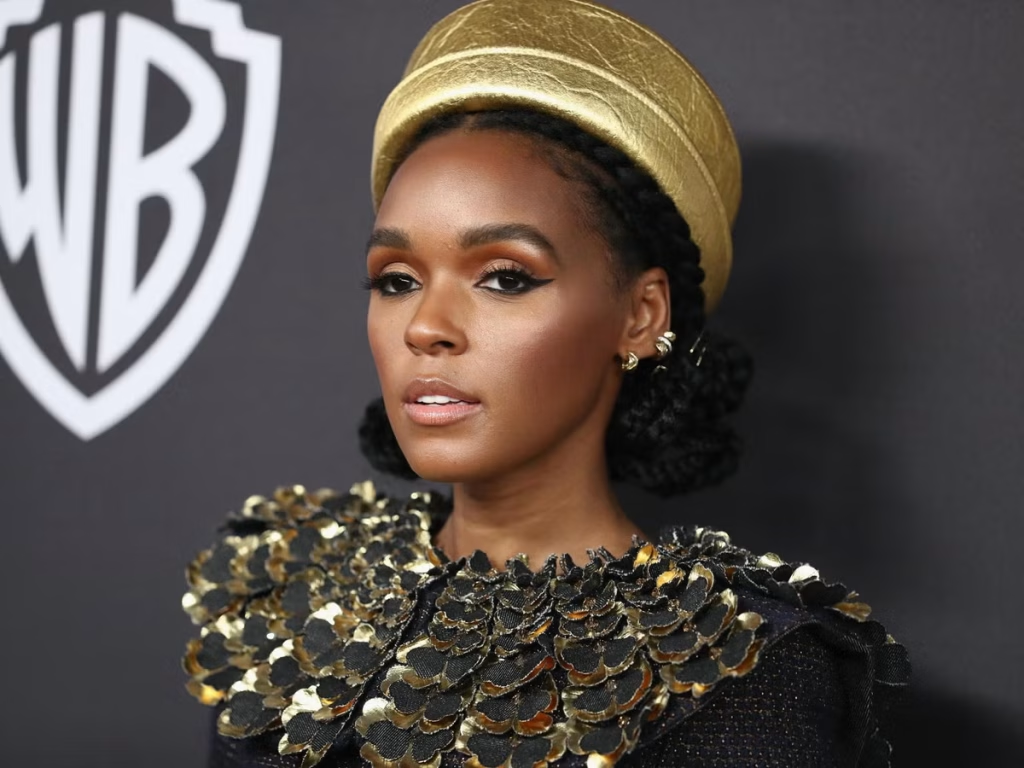
Janelle Monáe is a singer, actor, and Afrofuturist whose work pushes boundaries in both music and activism. Albums like Dirty Computer and writings like The Memory Library celebrate queer liberation and Black futurism, establishing Monáe as a global icon.

Monáe’s public embrace of their nonbinary identity adds visibility for queer people worldwide. Through creativity and advocacy, they have expanded the possibilities for expression, style, and art in mainstream culture.

9. Janet Mock
Janet Mock is an author, director, and producer whose memoirs, Redefining Realness and Surpassing Certainty, have become foundational texts in queer literature. Her work on the Emmy-winning series Pose opened doors for trans talent in television.

Mock’s influence extends from page to screen, creating space for trans and queer narratives while mentoring the next generation of artists. Her leadership demonstrates the transformative power of storytelling.
8. Laverne Cox
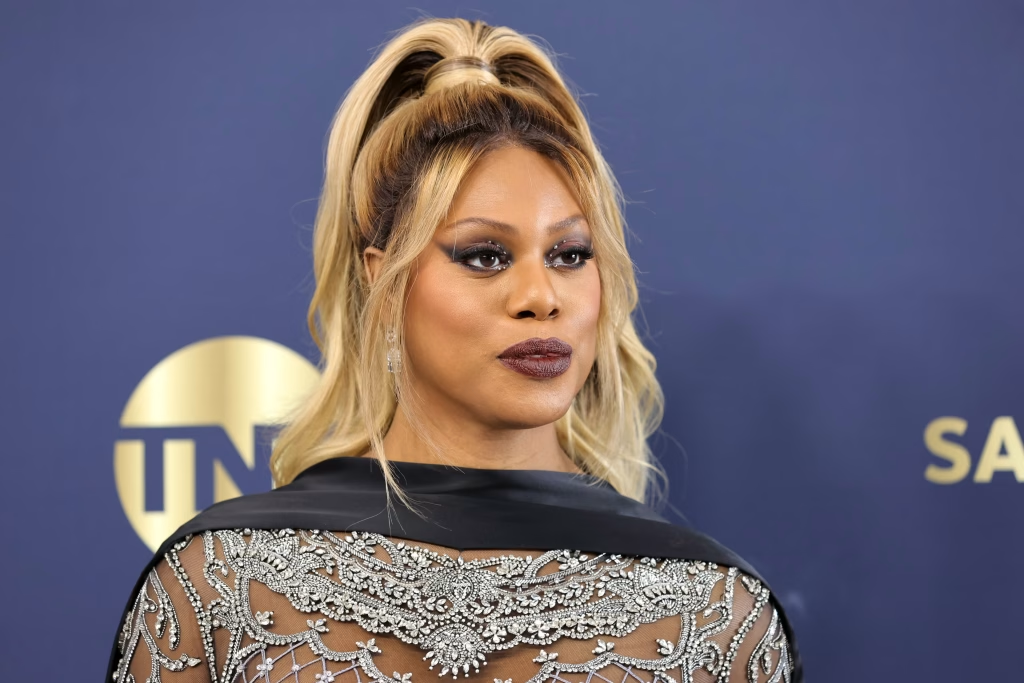
Laverne Cox became the first transgender person nominated for a Primetime Emmy in an acting category for her role as Sophia Burset on Orange Is the New Black. She also won a Daytime Emmy as an executive producer, breaking barriers behind the camera.

Cox uses her platform to advance trans rights and visibility, becoming a beacon of hope and representation. Her work highlights the importance of advocacy alongside artistry in reshaping culture.

7. Lorraine Hansberry
Lorraine Hansberry was the first Black playwright to win the New York Critics’ Circle Award for A Raisin in the Sun. Though she didn’t publicly identify as a lesbian during her lifetime, her diaries reveal a fiercely queer and politically engaged mind.

Hansberry’s writing and activism challenged both racial and gender norms. Her work paved the way for future Black and queer artists to tell their own stories with honesty and courage.

6. Audre Lorde
Audre Lorde described herself as a “Black, lesbian, feminist, mother, poet, warrior.” Her poetry and essays, including Coal, The Black Unicorn, and Zami: A New Spelling of My Name, continue to empower marginalized communities.

Lorde’s fearless exploration of race, gender, and her legacy as a literary and cultural force. She showed how words can inspire activism, self-acceptance, and societal change.

5. Bayard Rustin
Bayard Rustin was a key adviser to Martin Luther King Jr. and the chief organizer of the 1963 March on Washington. Openly gay, Rustin faced discrimination but remained a guiding force in the civil rights movement.

Rustin’s contributions were often overlooked due to homophobia, yet his work reshaped history. He exemplifies how courage, intelligence, and advocacy can change the world, even in the face of systemic barriers.

4. Marsha P. Johnson
Marsha P. Johnson was a transgender activist and performer central to the Stonewall uprising. Alongside Sylvia Rivera, she co-founded STAR (Street Transgender Action Revolutionaries), supporting homeless queer youth and workers.

Johnson’s activism continues to inspire trans rights movements. Her courage, leadership, and compassion have made her a lasting icon for queer liberation and justice.

3. James Baldwin
James Baldwin’s essays and novels, including Notes of a Native Son and Giovanni’s Room, explored race and identity with eloquence and insight. He challenged both Black and LGBTQ+ communities to confront prejudice and embrace intersectionality.

Baldwin’s voice resonated far beyond literature. Through lectures, essays, and interviews, he educated and inspired generations, leaving a blueprint for advocacy through art and intellect.

2. Gladys Bentley
During the Harlem Renaissance, Gladys Bentley was a groundbreaking blues singer who defied gender norms by performing in tuxedos and top hats. Openly lesbian, she became one of the era’s most celebrated entertainers. Bentley’s boldness challenged societal expectations, serving as a model for queer performers and helping carve out visibility for Black LGBTQ+ artists in the early 20th century.

1. Miss Major Griffin-Gracy
Miss Major Griffin-Gracy has spent decades advocating for Black transgender women, especially those incarcerated. Her leadership with the Transgender Gender-Variant community and tireless activism have made her a living legend.

Known affectionately as “Mama,” Miss Major continues to mentor, protect, and inspire. Her lifetime of work exemplifies courage, resilience, and the power of giving back to one’s community, cementing her as a foundational figure in LGBTQ+ activism.

From historic pioneers to modern-day visionaries, these Black LGBTQ+ trailblazers have shaped entertainment, art, and activism alike. Their creativity, courage, and advocacy have expanded representation, opened doors, and inspired generations to live boldly. Their stories remind us that visibility matters, and the fight for equality is ongoing, but the path forward is brighter because of them.