


Television has long been a mirror of society, reflecting culture, values, and representation. For decades, Black women faced significant barriers in the industry, often limited to stereotypical or secondary roles. Yet, a courageous group of performers challenged those boundaries, creating space for nuanced, powerful, and unforgettable portrayals that changed TV forever. These 14 women not only broke barriers in front of the camera but also influenced storytelling behind the scenes. Through acting, producing, writing, and activism, they reshaped how Black women are seen and inspired future generations to dream bigger. Here are the trailblazers who redefined television.

14. Quinta Brunson
Quinta Brunson has quickly become one of television’s brightest voices as the creator and star of Abbott Elementary. Her portrayal of Janine Teagues is a perfect mix of humor, hope, and authenticity, reflecting the realities of underfunded public schools while celebrating the dedication of educators.

Brunson’s work has earned her multiple Emmy Awards, including a historic win as Lead Actress in a Comedy, making her the first Black woman in over forty years to take that honor. By centering stories that matter and infusing them with humor, she proves that modern television can be inclusive, intelligent, and joyfully entertaining.

13. Laverne Cox
Laverne Cox made history with her role as Sophia Burset on Orange Is the New Black, becoming the first openly transgender actor nominated for a Primetime Emmy. Her performance brought authenticity, visibility, and humanity to transgender stories on mainstream television.

Beyond acting, Cox has broken barriers as a producer, advocate, and activist, becoming the first trans woman to win a Daytime Emmy as a producer and the first trans person featured on the cover of Time. Her influence extends far beyond the screen, creating opportunities and inspiring countless viewers and creators.

12. Angela Bassett
Angela Bassett’s commanding presence has elevated every project she’s touched, from early portrayals of Katherine Jackson and Rosa Parks to her role as Athena Grant on 9-1-1. Her versatility and talent have earned her Emmy nominations and cemented her status as one of the highest-paid Black actresses on television.

Bassett has also produced numerous projects, proving that Black women can lead action-packed, dramatic, and prestige television while shaping industry standards. Her career demonstrates that excellence, authority, and longevity are not mutually exclusive in Hollywood.

11. Viola Davis
Viola Davis made history as the first Black woman to win the Primetime Emmy for Outstanding Lead Actress in a Drama Series with her portrayal of Annalise Keating on How to Get Away with Murder. Her fearless and layered performance set a new standard for television storytelling.

Already celebrated on stage and in film, Davis brought extraordinary depth to television, earning numerous awards and cementing her influence on the industry. She continues to inspire audiences and creators alike, proving that complex, authentic Black female characters can lead major series.
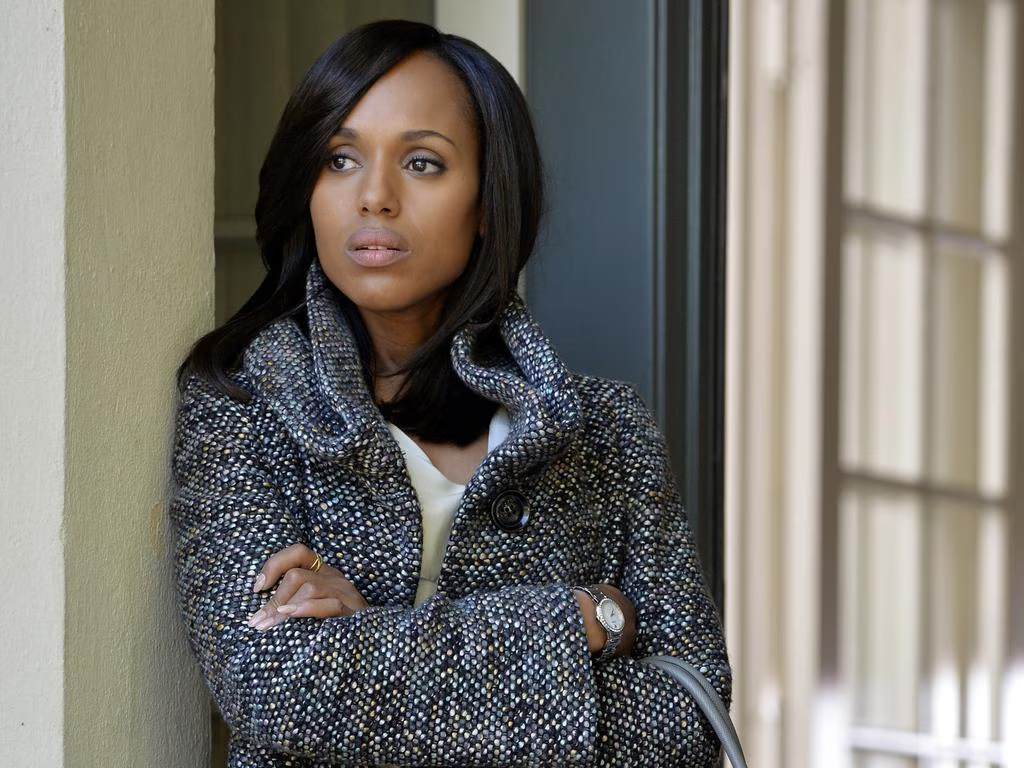
10. Kerry Washington
Kerry Washington broke long-standing barriers as Olivia Pope on Scandal, becoming the first Black woman in nearly forty years to lead a network primetime drama. Her portrayal of a brilliant, stylish, and morally complex crisis manager captivated audiences and redefined the possibilities for Black actresses on network TV.

Washington also produces and directs, fostering inclusive storytelling and mentoring new talent. Her trailblazing path opened doors for future Black women to lead primetime dramas while advocating for representation and authentic narratives.

9. Oprah Winfrey
Oprah Winfrey redefined daytime television with The Oprah Winfrey Show, becoming the first Black woman to produce and own her nationally syndicated program. Her empathetic and engaging style transformed TV into a platform for conversation, empowerment, and cultural change.

Through Harpo Productions and the OWN Network, Winfrey built a media empire that launched careers, shaped public discourse, and highlighted underrepresented stories. Her legacy demonstrates how television can be a tool for both entertainment and societal transformation.

8. Debbie Allen
Debbie Allen’s multifaceted career spans acting, dancing, choreography, directing, and producing. She gained recognition starring in Fame, becoming the first Black woman to win a Golden Globe in her category and earning numerous Emmy nominations.

Beyond performing, Allen has directed and produced influential series like A Different World and Grey’s Anatomy, nurturing new generations of talent. Her career exemplifies the power of versatility and mentorship in shaping the television landscape.

7. Phylicia Rashad
Phylicia Rashad transformed perceptions of Black motherhood on television through her role as Clair Huxtable on The Cosby Show. Her elegant, intelligent, and loving portrayal broke stereotypes and became a model for future TV matriarchs.

Rashad’s career extends beyond acting, including stage work in A Raisin in the Sun and roles in This Is Us and The Gilded Age. Her enduring presence continues to inspire audiences and redefine what strong, intelligent women can contribute to television.

6. Leslie Uggams
Leslie Uggams made history as the first Black woman in the modern era to host a network variety show with The Leslie Uggams Show. Her charisma and talent paved the way for performers of color in mainstream entertainment.

Uggams also delivered standout performances as Kizzy in Roots, earning Emmy and Golden Globe nominations. Her ability to thrive across genres—from variety shows to dramas—demonstrates the breadth of possibilities for Black women on television.

5. Cicely Tyson
Cicely Tyson elevated television into an art form with roles that celebrated the dignity and complexity of Black women. Her Emmy-winning performance in The Autobiography of Miss Jane Pittman remains a benchmark of excellence.

Tyson’s career earned her multiple Emmys, the Kennedy Center Honors, the Presidential Medal of Freedom, and an Honorary Academy Award. Her dedication to integrity and representation transformed television storytelling, leaving an unmatched legacy.

4. Esther Rolle
Esther Rolle redefined Black motherhood with her portrayal of Florida Evans on Maude and Good Times. She insisted on portraying her character with strength, dignity, and realism, challenging stereotypes that often dominated TV at the time.

Rolle’s accolades included an Emmy win for Summer of My German Soldier and the NAACP Chairman’s Civil Rights Leadership Award. Her advocacy for authentic representation made lasting contributions to television and culture.

3. Roxie Roker
Roxie Roker made television history as Helen Willis on The Jeffersons, part of one of the first interracial couples regularly featured on primetime TV. Her portrayal blended warmth, intelligence, and humor, breaking societal barriers with grace.

Roker’s career also included influential appearances in Roots and Claudine, as well as work in community advocacy in Los Angeles. Her commitment to representation helped normalize inclusion on television in meaningful and enduring ways.

2. Nichelle Nichols
Nichelle Nichols made history as Lieutenant Nyota Uhura on Star Trek, one of the first non-stereotypical roles for a Black woman in American television. Uhura’s intelligence, skill, and equality within the crew offered a revolutionary vision of the future.

Nichols also contributed to NASA’s efforts to recruit women and people of color into the astronaut corps, inspiring generations to imagine themselves in roles once thought impossible. Her legacy is one of empowerment, representation, and breaking barriers.

1. Diahann Carroll
Diahann Carroll broke television history in 1968 as the first Black woman to headline a network series without being cast as a domestic worker. Her role as Julia Baker in Julia was groundbreaking, showing Black women as intelligent, independent, and modern.

Carroll later starred as Dominique Devereaux on Dynasty, demonstrating that Black women could also play glamorous, powerful, and multidimensional characters. Her induction into the Television Academy Hall of Fame cemented her status as a pioneer, leaving a legacy that continues to inspire.

These 14 women reshaped television, proving that talent, vision, and persistence can challenge stereotypes and open doors. Their performances, leadership, and advocacy not only expanded opportunities for Black women on screen but also enriched storytelling for all audiences. From comedic brilliance to dramatic gravitas, from groundbreaking roles to mentorship behind the scenes, these trailblazers remind us that representation matters and that the courage to break barriers can transform an entire industry.